
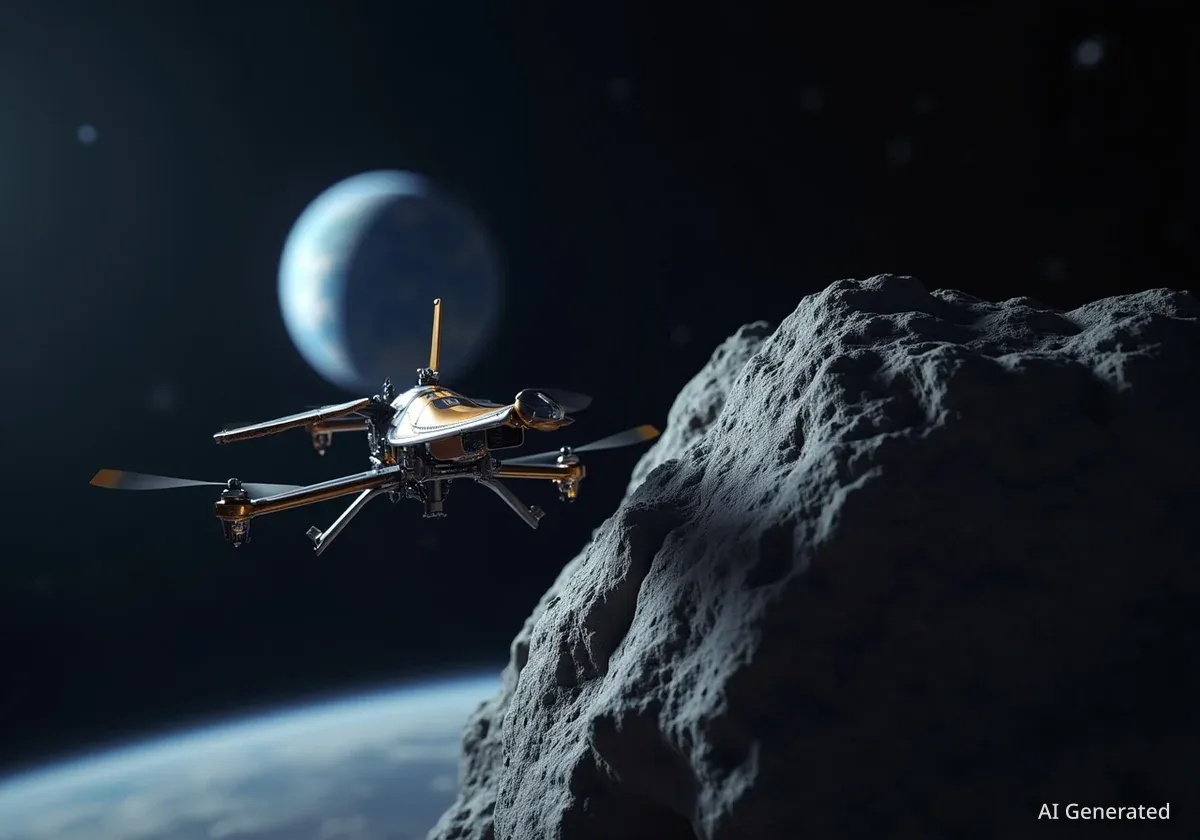



A new commercial space race is underway as private companies develop technologies to extract valuable resources from asteroids. Driven by significantly lower launch costs, firms like TransAstra and AstroForge are pursuing ambitious plans that could transform industries both in space and on Earth.
These efforts are split between two primary goals: harvesting materials for use in space to support future missions and bringing precious metals back to our planet. This emerging sector is attracting significant investment and pushing the boundaries of space exploration and resource utilization.
Key Takeaways
- The cost of launching payloads into space has decreased dramatically, making commercial asteroid mining more economically viable.
- Companies are pursuing two main strategies: in-situ resource utilization (ISRU) to create fuel and water in space, and returning valuable metals to Earth.
- TransAstra is developing technology for ISRU, while AstroForge aims to mine platinum-group metals for terrestrial use.
- While not directly involved in commercial mining, NASA's research into resource extraction on the Moon and asteroids is advancing the underlying technologies.
The Economic Drivers of a New Space Industry
The concept of mining asteroids is not new, but recent technological advancements have moved it from science fiction to a tangible business objective. The primary catalyst has been the sharp decline in the cost of reaching low Earth orbit, which is an altitude between 90 and 600 miles above the planet's surface.
Innovations like reusable rockets, pioneered by companies such as SpaceX, have fundamentally altered the economics of space travel. According to industry experts, launch costs are expected to continue falling, potentially reaching just a few hundred dollars per kilogram in the coming years. This reduction makes complex missions, including those for resource extraction, financially practical for the first time.
Joel Sercel, the CEO and founder of space technology company TransAstra, believes this shift will trigger a major economic boom. "I anticipate a massive gold rush to asteroid mining once the world figures this out," Sercel stated. He compares the current moment to transformative periods in history, like the rise of steamboats or the development of the transcontinental railroad.
15,000 Potential Targets
In the last decade alone, researchers have identified approximately 15,000 near-Earth asteroids that have potential for resource mining. These celestial bodies are rich in water, iron, nickel, and precious metals.
Two Competing Visions for Asteroid Resources
As the asteroid mining industry begins to take shape, two distinct business models have emerged. One focuses on building a sustainable in-space economy, while the other aims to supplement Earth's supply of rare and valuable materials.
TransAstra: Building an Economy in Space
TransAstra is a leading proponent of in-situ resource utilization (ISRU). This approach involves collecting, processing, and using materials found on celestial bodies to support space missions. The goal is to create essential supplies like water, oxygen, and rocket propellant without having to launch them from Earth.
The company is developing a system called Optical Mining, which uses concentrated sunlight to extract resources. In 2019, TransAstra partnered with NASA to create a prototype named MiniBee to demonstrate this technology. Sercel explained that harvesting resources in space is critical for long-term exploration. "The first actor is going to have a huge advantage that will give them a lasting leg up in space for decades and maybe centuries to come," he said.
TransAstra is also working on methods to capture asteroids. This fall, one of its specialized capture bags will be delivered to the International Space Station for a test mission to secure space debris. The company plans to adapt this technology to eventually capture asteroids "the size of houses" for processing.
AstroForge: Bringing Precious Metals Home
In contrast, the startup AstroForge is focused on what many consider the more traditional prize of asteroid mining: bringing valuable platinum-group metals back to Earth. These metals are essential for manufacturing high-tech products like smartphones and computer chips.
"I envision replacing the supply of critical minerals from an earth-based approach to a space-based approach," said Matt Gialich, co-founder and CEO of AstroForge.
Gialich compares the potential impact to the history of aluminum, which was once considered a precious metal until a new production process made it inexpensive and widely available in the 19th century. He believes asteroid mining could do the same for metals like platinum and palladium.
AstroForge's Missions
The three-year-old company is moving quickly. In February, it launched its first deep-space mission, Odin, to take images of an asteroid. Though contact with the spacecraft was lost after it passed the Moon, the company stated it achieved several key objectives. Next year, AstroForge plans to launch Vestri, a 200-kilogram spacecraft designed to be the first private mission to land on a metallic asteroid.
NASA's Foundational Research and Support
While NASA does not have its own asteroid mining program, the agency's work in planetary science and resource utilization is providing a crucial foundation for the commercial sector. NASA has conducted numerous studies and experiments related to ISRU, recognizing its importance for future human exploration.
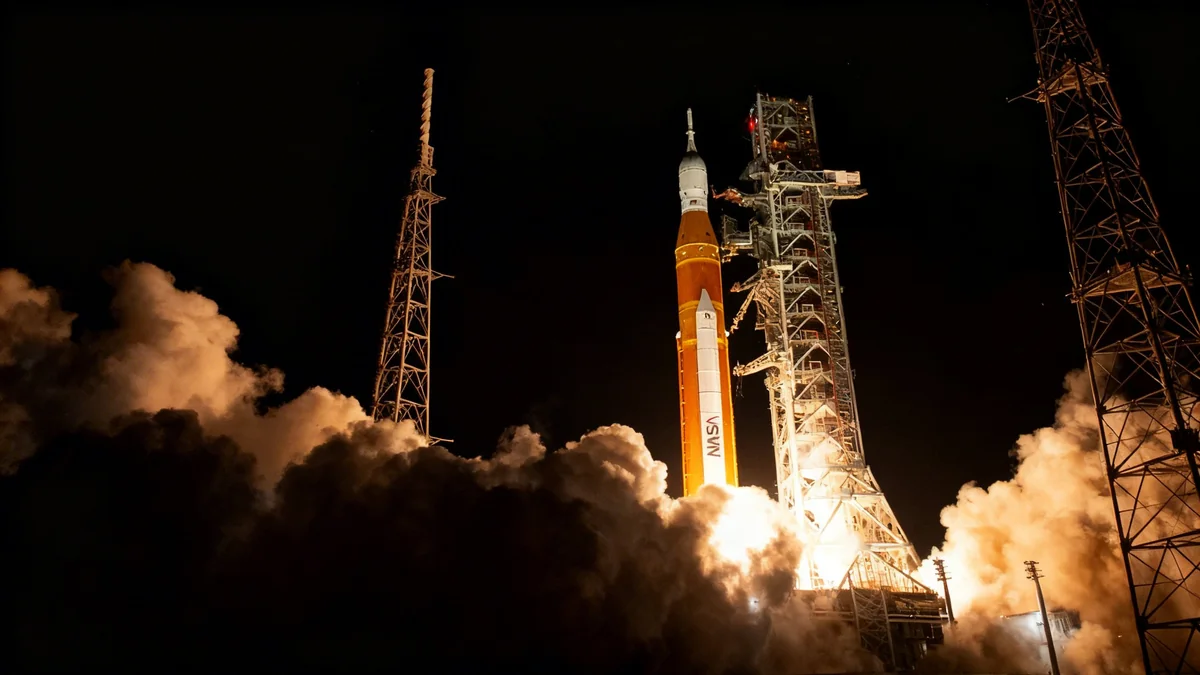
The agency's Artemis missions, which aim to return humans to the Moon, have accelerated research into extracting resources from regolith—the layer of loose dust and minerals covering the surface of the Moon and asteroids. Being able to use regolith to produce oxygen, water, or even construction materials would be a significant step toward establishing a long-term human presence beyond Earth.
"If we want to use the moon as a launching pad, we might need to build things," explained NASA spokeswoman Jasmine Hopkins. "So being able to extract [elements] from the lunar surface would be a huge deal."
Furthermore, NASA missions provide invaluable data about the composition of asteroids. The OSIRIS-REx mission successfully collected a sample from the asteroid Bennu two years ago. Analysis revealed that the sample contained nitrogen-rich material and evidence of water, key ingredients that help scientists understand how the building blocks of life may have been delivered to Earth.
Challenges and the Path Forward
Despite the growing optimism, the path to commercial asteroid mining is filled with significant technical and financial challenges. Deep-space missions are inherently risky, as demonstrated by AstroForge's loss of communication with its Odin spacecraft. Landing on and extracting materials from a small, low-gravity body hundreds of millions of miles away is an engineering feat that has yet to be proven commercially.
Companies must develop robotic systems capable of operating autonomously in harsh space environments. They also need to perfect refining processes that can turn raw asteroid material into usable products, whether it's rocket fuel or purified metals.
However, the potential rewards continue to drive innovation. As launch costs decrease and technology matures, the prospect of a vibrant off-world economy based on asteroid resources appears closer than ever. The coming decade will be a critical period, determining which companies and which strategies will succeed in this new celestial gold rush.