
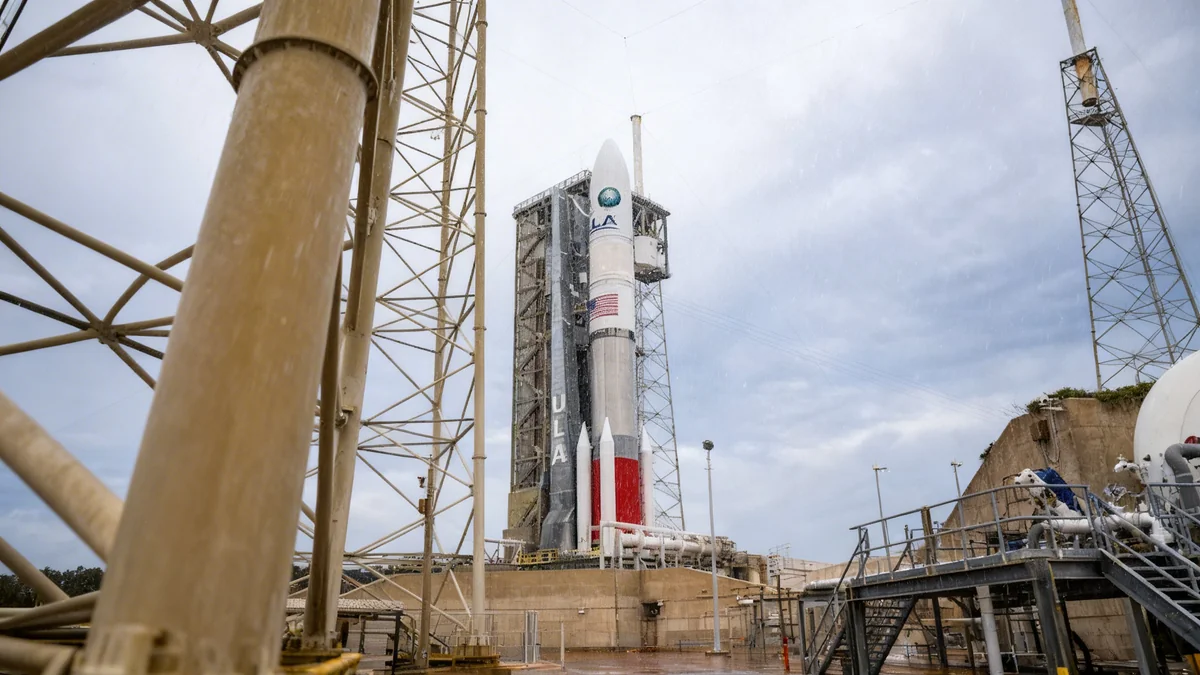


United Launch Alliance is preparing for its first mission of the year, a predawn launch of its Vulcan rocket from Cape Canaveral Space Force Station. The flight, designated USSF-87, will carry a national security payload for the U.S. Space Force into a complex, high-altitude orbit.
Liftoff from Space Launch Complex 41 is scheduled for Thursday morning, with a two-hour window opening at 3:30 a.m. EST. This mission represents the second time ULA's new Vulcan rocket has been tasked with a national security launch and is set to be the company's longest flight to date.
Key Takeaways
- United Launch Alliance's Vulcan rocket is scheduled to launch the USSF-87 mission for the U.S. Space Force.
- The primary payload is the Geosynchronous Space Situational Awareness Program (GSSAP) satellite system, designed for orbital surveillance.
- The mission will last approximately 10 hours, making it ULA's longest flight duration on record.
- The exact number of satellites on board has not been disclosed due to the mission's national security classification.
A Complex Mission Profile
The USSF-87 mission is a demonstration of the Vulcan rocket's capabilities, specifically its ability to deliver significant payloads directly to geosynchronous Earth orbit (GEO), an altitude of roughly 22,000 miles (35,000 km).
Gary Wentz, ULA’s vice president of Atlas and Vulcan Programs, noted that the rocket was specifically designed for such demanding flights. "Vulcan was purpose built and this is the type of mission that the team actually designed this launch vehicle to support," he said. "It’s significant payloads to very complex orbits, multi-manifested national security space, direct to GEO."
The total mission duration from launch to final payload deployment is expected to be 10 hours. This extended timeline allows the Centaur 5 upper stage to perform multiple burns to precisely position the satellites in their operational orbit.
Rocket Configuration: VC4S
The Vulcan rocket for this mission is flying in its VC4S configuration. This includes four side-mounted Graphite Epoxy Motor (GEM) 63XL solid rocket boosters and a standard 51-foot-long payload fairing to protect the sensitive cargo during ascent.
Eyes in the Sky The GSSAP Payload
What is GSSAP?
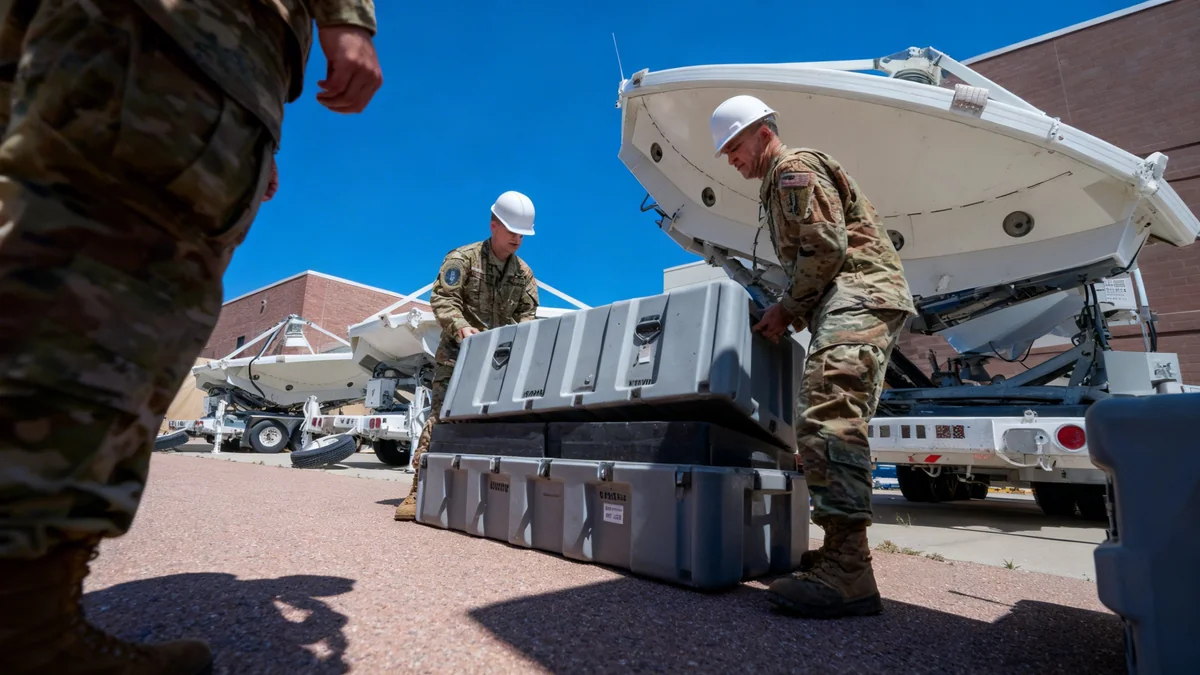
The primary payload for the USSF-87 mission is the Geosynchronous Space Situational Awareness Program (GSSAP) system. According to the U.S. Space Force’s Space Systems Command (SSC), these satellites function as high-performance sensors for the Space Surveillance Network.
Their main purpose is to enhance the military's awareness of objects and activities in the critical geosynchronous orbit. This region of space is home to vital communication, weather, and national security satellites.
"In addition to the GSSAP payload, USSF-87 will include additional research, development and training systems. Guardians will use these systems to refine tactics, techniques and procedures for precision on-orbit maneuvers." - U.S. Space Force's Space Systems Command
An Undisclosed Number of Satellites
While GSSAP is the main cargo, officials have not confirmed how many satellites are packed inside the Vulcan's fairing. Historically, these satellites have been launched in pairs. The most recent mission in January 2022 carried GSSAP-5 and GSSAP-6 into orbit aboard an Atlas 5 rocket.
In addition to the GSSAP spacecraft, the mission also carries a secondary payload platform. This system, Northrop Grumman’s ESPAStar, is a maneuverable spacecraft that can host multiple smaller experiments and deployable payloads, further maximizing the launch's utility for research and development.
The Importance of Geosynchronous Orbit
Geosynchronous orbit is a highly valuable orbital slot approximately 22,000 miles above the Earth's equator. A satellite in this orbit matches the planet's rotation, allowing it to remain over the same point on the ground. This is crucial for communications, broadcasting, and persistent surveillance, making it a congested and strategically important region of space.
Launch and Weather Outlook
The flight will begin with the Vulcan rocket, designated V-005, lifting off on an easterly trajectory from Cape Canaveral. The four solid rocket boosters will provide extra thrust for the first two minutes of flight before being jettisoned. The main Vulcan booster will separate from the Centaur 5 upper stage about five minutes into the mission.
From there, the Centaur 5 will conduct its long-duration flight to deliver the payloads. Due to the classified nature of the mission, the exact timing of payload deployments will not be made public.
Weather conditions for the launch attempt appear favorable. The 45th Weather Squadron has forecast a 95 percent chance of acceptable conditions during the launch window. Forecasters noted the potential for some shallow mist in the early morning hours, but no significant weather concerns are expected. They are, however, monitoring solar activity for any potential X-ray flares that could affect operations.