



The U.S. Army is moving forward with plans to establish a new space-focused career field for 1,000 soldiers, prompting a defense of the program by senior officials who say the unit will not overlap with the mission of the U.S. Space Force. The new specialty, designated 40D Tactical Space Operations Specialist, is designed to provide direct support to ground troops.
Officials from the Army’s Space and Missile Defense Command (SMDC) have addressed concerns that the new unit could create redundancies and waste resources. They argue that the Army has unique, ground-based space requirements that the Space Force, with its focus on orbital operations, is not equipped to handle alone.
Key Takeaways
- The U.S. Army is creating a new military occupational specialty (MOS) called 40D Tactical Space Operations Specialist.
- The new career field will consist of approximately 1,000 soldiers, from the rank of Specialist (E-4) to Sergeant Major (E-9).
- Army officials state the unit's mission is distinct from the U.S. Space Force, focusing on ground-based tactical support.
- The primary roles of 40D specialists will include electronic warfare, satellite communications, missile tracking, and intelligence for ground combat units.
- The move has sparked debate over whether specialized space units within each service branch undermine or strengthen the overall joint force.
Defining a Terrestrial Mission in Space
The core of the Army's argument for the 40D specialty lies in its mission focus. While the Space Force is responsible for operating satellites, orbital warfare, and maintaining U.S. assets in space, the Army's new unit will concentrate on leveraging those assets for tactical advantage on the battlefield.
Col. Felix Torres, commandant of the Army’s SMDC Center of Excellence, recently clarified the distinction. He explained that the Army's role is not to control satellites but to manage the ground-based systems that communicate with them and protect ground forces from space-enabled threats.
"It is not like we’re trying to encroach on their requirements, or their mission set," Col. Torres stated in an interview. "We have very specific mission sets."
He compared the situation to military aviation, where multiple branches operate aircraft for their specific needs. "The Navy probably has, if not mistaken, more airplanes than the Air Force does. The Marines have their own airplanes too. We didn’t say, ‘Give it all to the Air Force,’ because it wouldn’t work that way," he explained.
The Role of a Tactical Space Specialist
Soldiers in the 40D field will be tasked with a range of critical ground-support functions. These responsibilities are designed to integrate space capabilities directly into Army operations at the tactical level.
Key duties for these specialists will include:
- Early detection and tracking of ballistic missiles.
- Managing tactical satellite communications (SATCOM).
- Conducting high-altitude navigation warfare.
- Executing intelligence, surveillance, and reconnaissance (ISR) missions.
- Performing counter-ISR to deny adversaries the use of their own space assets.
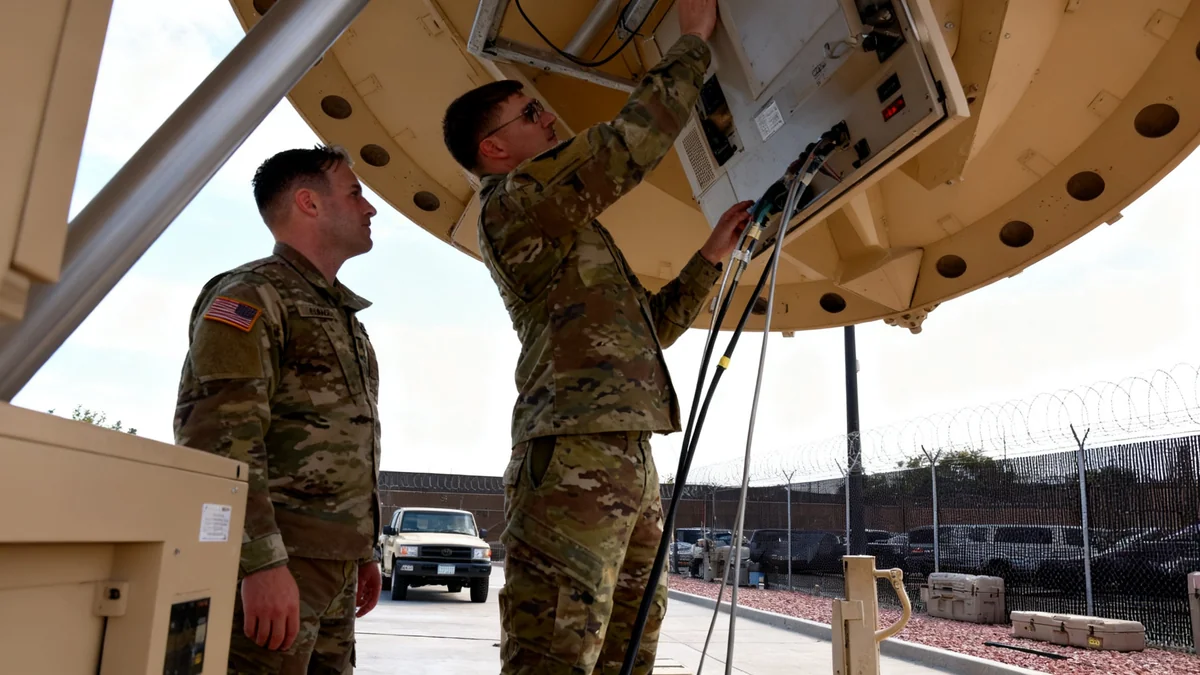
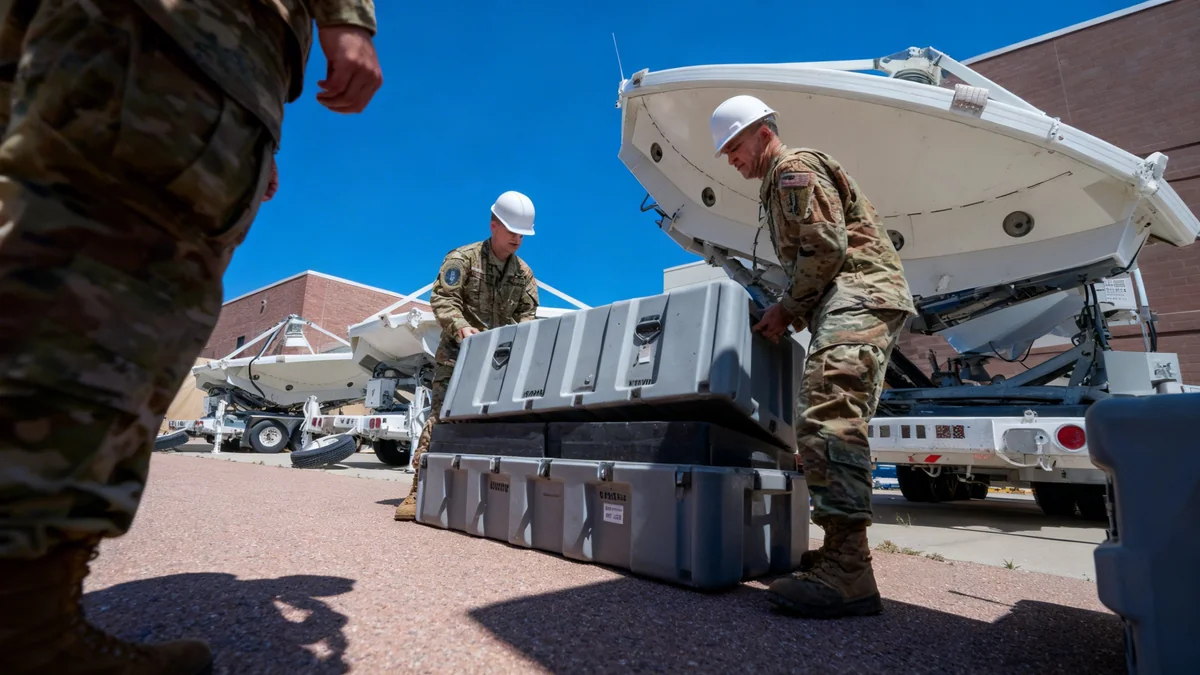
These soldiers will operate equipment like the Mobile Integrated Ground Suite, a transportable system that allows for rapid deployment and demonstrates the Army's expeditionary capabilities to allies.
By the Numbers: Army Space Operations
- 1,000: The target number of soldiers for the new 40D career field.
- E-4 to E-9: The eligible ranks for the new specialty, encompassing non-commissioned officers.
- Directive 5100.01: The Department of Defense directive that instructs each service to man, train, and equip its own space forces.
Addressing the Joint Force Debate
The creation of the 40D specialty has not been without criticism. Some defense analysts argue that specialized space units within individual services could lead to organizational fissures and undermine the principle of a unified joint force. The concern is that it could dilute resources and create competing efforts rather than a single, coordinated approach to the space domain.
However, Army leadership maintains that this structure is not only necessary but mandated. Col. Torres pointed to Department of Defense Directive 5100.01, which directs each service to develop its own space forces to meet service-specific requirements. The argument is that the Space Force cannot be expected to provide the granular, embedded support that Army ground units require.
A History of Service-Specific Capabilities
The debate over specialized units is not new in the U.S. military. For decades, different branches have maintained their own capabilities in domains traditionally associated with another service. The U.S. Marine Corps has its own air wing for close air support, and the U.S. Navy operates a vast number of aircraft. These precedents support the Army's position that each service must be equipped to handle its unique operational needs, even in the space domain.
Collaboration remains a key component of the strategy. Army officials emphasize that the 40D specialists will work closely with the Space Force. This partnership will involve synchronizing terrestrial effects, developing targets, and planning space control operations to counter threats from adversaries like China and Russia.
"Both China and Russia pose grave stress to US and international space capabilities," Col. Torres noted, adding that defeating these threats will require a "joint fight."
Recruitment and Training for a New Era
The Army plans to fill the 1,000 positions primarily with soldiers from existing units who already possess expertise in related fields, such as air defense, satellite communications, and space-based intelligence. While previous space experience is beneficial, it is not a requirement.
"It really comes down to a matter of performance, and we want the best and the brightest to get into this job," said Col. Torres. The focus is on attracting high-performing soldiers who can be trained for these complex new roles.
Notably, the training for 40D specialists will be conducted entirely by the Army, not the Space Force. This decision reinforces the distinct nature of the Army's mission. The curriculum will be tailored to ground-based systems and tactical applications, which differ significantly from the Space Force's training on on-orbit operations and satellite control.
Global Deployment and Future Impact
Once trained, these space specialists will be assigned to a variety of units across the globe. Some will join Army combatant commands in Europe, Africa, and the Pacific. Others will support multi-domain task forces or work directly within the SMDC in support of broader commands like SPACECOM and NORAD.
The establishment of this career field reflects the modern reality that space is an integral part of all military operations. By embedding space expertise directly within its ground forces, the Army aims to enhance its lethality, improve its communications, and better protect its soldiers in a contested, multi-domain environment.