
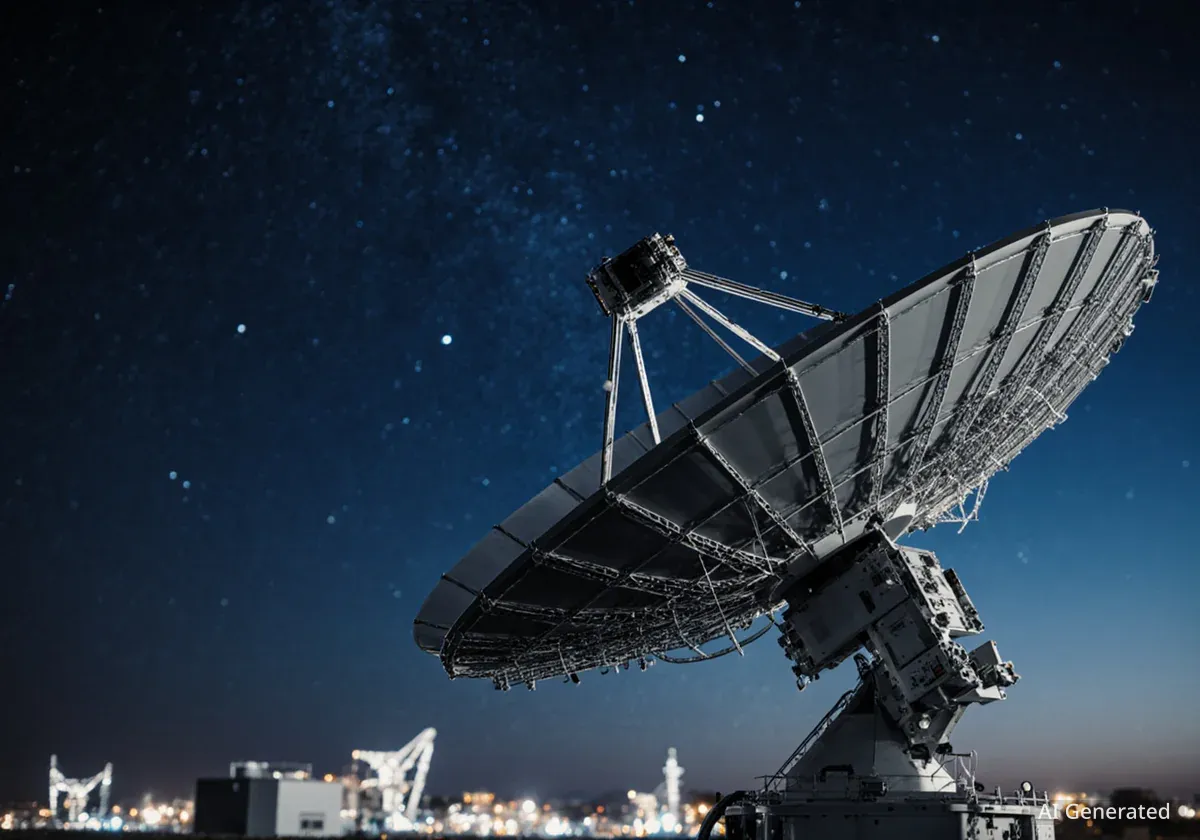
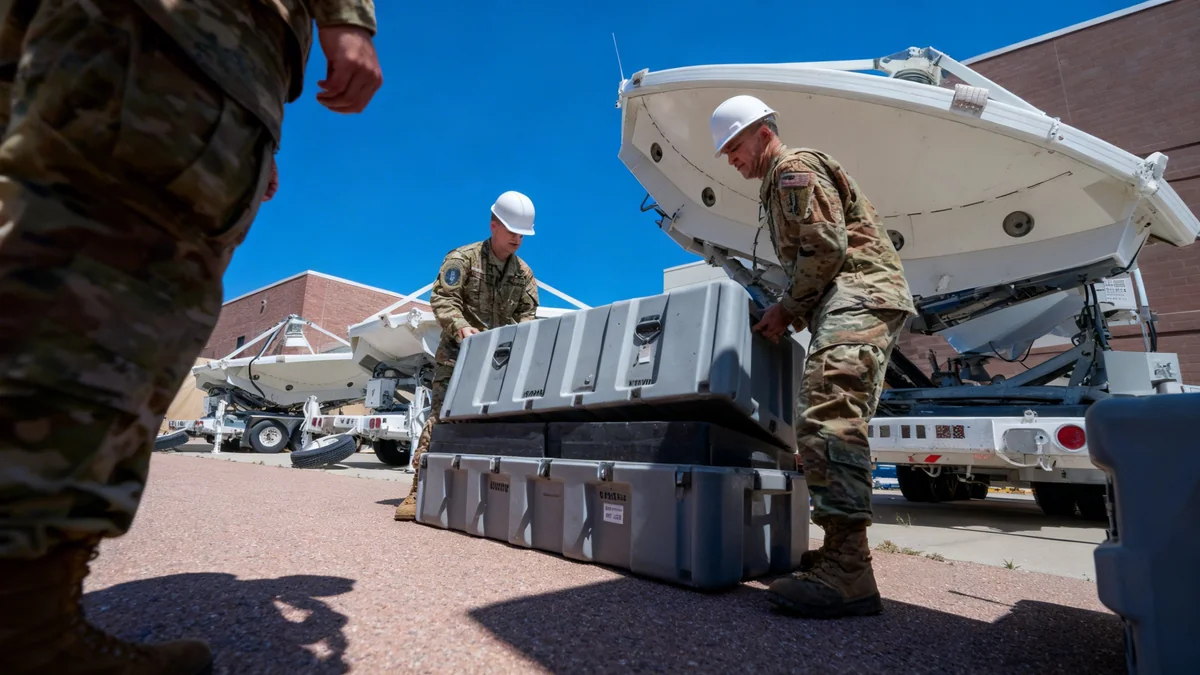



Amid heightened regional tensions, Israel is accelerating the development of advanced space-based technologies, viewing orbital capabilities as a critical component of its national security strategy. Officials confirm that lessons from recent conflicts have prompted a significant push to innovate, ensuring the nation maintains a decisive intelligence advantage over adversaries like Iran.
The country's defense establishment is focusing on creating new satellite constellations and leveraging artificial intelligence to provide real-time surveillance across the Middle East. This strategic shift also aims to bolster Israel's commercial space sector, positioning it as a key player in the rapidly growing global space economy.
Key Takeaways
- Israel is developing new space capabilities as a strategic response to regional threats, particularly from Iran.
- Recent military operations have reinforced the necessity of space superiority for intelligence gathering and operational support.
- The national space program is transitioning from a purely defense focus to a dual-use model, encouraging commercial growth.
- New government initiatives, like the Space Center in Mitzpe Ramon, are designed to support startups and reduce barriers to entering the space industry.
The Unseen Frontline in Orbit
For Israel, space is not a frontier of exploration but a vital operational domain. The nation's presence in orbit is driven by what defense officials describe as a fundamental necessity for survival and security. This reliance has only deepened following the events of October 7, which highlighted the reality of managing seven active conflict fronts simultaneously.
Avi Berger, head of the Space Office at the Defense Ministry’s Directorate of Defense Research & Development (MAFAT), emphasized that Israel’s space assets are integral to the operational needs of the Israel Defense Forces (IDF). He described the country's satellite constellations as the backbone of its intelligence-gathering architecture.
“We are in space for Israel’s and the IDF’s operational needs. A single constellation can cover everything from Gaza to Iran. It doesn’t matter which front ignites – you have intelligence.”
These constellations generate immense volumes of imagery, enabling analysts to extract critical data in real time. Berger noted the role of advanced technology in this process, stating, “All of this is powered by what I call ‘AI on steroids.’”
A Unique Launch Challenge
Israel is one of only 13 countries with the capability to launch its own satellites. However, its geopolitical situation imposes unique constraints. To avoid flying over hostile territory during the sensitive launch phase, Israel launches its satellites westward over the Mediterranean Sea, against the Earth's rotation.
Understanding Retrograde Orbits
Launching against the Earth's rotation, known as a retrograde orbit, requires significantly more fuel and thrust compared to an eastward launch that benefits from the planet's rotational speed. This reduces the maximum payload capacity of the launcher but is a necessary security precaution for Israel to protect its advanced satellite and launcher technology from falling into enemy hands.
This technical challenge underscores the high stakes involved. The electro-optical reconnaissance satellites and the launchers, which some reports link to the Jericho ballistic missile program, represent a significant strategic asset that must be protected at all costs.
From Conflict to Innovation
Recent military engagements have served as a powerful catalyst for Israel's space development. The conflict with Iran, dubbed Operation Rising Lion, was a watershed moment, demonstrating the decisive role of satellite technology in modern warfare.
According to Berger, the satellite constellation was a “full partner” in all operational activities. Over the 12 days of the operation, Israeli satellites collected tens of millions of square kilometers of high-resolution imagery, day and night. This data stream allowed for real-time target identification and provided secure communication links for strike operations without risking ground forces.
The lessons from such conflicts are clear. “We knew right away that we had to build and create new surprises for the next war,” Berger stated. “Whatever was deployed in June won’t be enough next time.” This forward-looking perspective drives a continuous cycle of innovation within the defense sector.
Global Space Environment Transformed
The global perception of space has shifted dramatically. Once seen as a peaceful domain governed by the 1967 Outer Space Treaty, it is now a contested environment. The war in Ukraine demonstrated how commercial systems like Starlink and Maxar can have a significant impact on battlefield outcomes, blurring the lines between civilian and military assets.
Building a Commercial Space Economy
While security remains the primary driver, Israel is also focused on building a robust commercial space industry. The government sees this as both a strategic and economic opportunity, transforming the sector from a closed, defense-centric field into a dynamic commercial ecosystem.
Innovation, Science and Technology Minister Gila Gamliel described space as a “new line of defense” but also highlighted its economic potential. “We proved our leadership in space innovation for security needs,” she said, referencing Operation Rising Lion.
The government is actively fostering this growth through several initiatives:
- International Partnerships: Israel maintains a decade-long cooperation agreement with NASA and participates in the Artemis lunar program. It has also signed new space agreements with countries like Azerbaijan and Hungary.
- Support for Startups: Recognizing the high cost of entry, the government is creating infrastructure to help smaller companies.
- Space Center in Mitzpe Ramon: A new NIS 60‑million “Space City” will provide regulatory support and subsidized access to launch and testing infrastructure for Israeli tech companies.
Israel's Growing Space-Tech Sector
According to a 2026 report from Startup Nation Central, Israel's space technology landscape includes approximately 90 companies. The sector saw 66% growth between 2020 and 2023, outpacing the wider tech ecosystem. The global space economy is valued at over $600 billion, and Israel is positioning itself to be a key strategic partner.
The Path Forward
Despite the progress, challenges remain. Officials acknowledge that startups still lack the same access to research and development infrastructure as established giants like Israel Aerospace Industries (IAI) or Elbit Systems. Strengthening the academic and research ecosystem is seen as crucial for long-term success.
The consensus among Israeli leaders is that space is no longer a niche interest but an essential pillar of national survival and economic prosperity. As Minister Gamliel noted, humanity is expanding into space “not as isolated pioneers, but together.” For Israel, that collaborative spirit is matched by a stark reality voiced by Berger: “We always has to think outside the box. We don’t have any other choice.”