
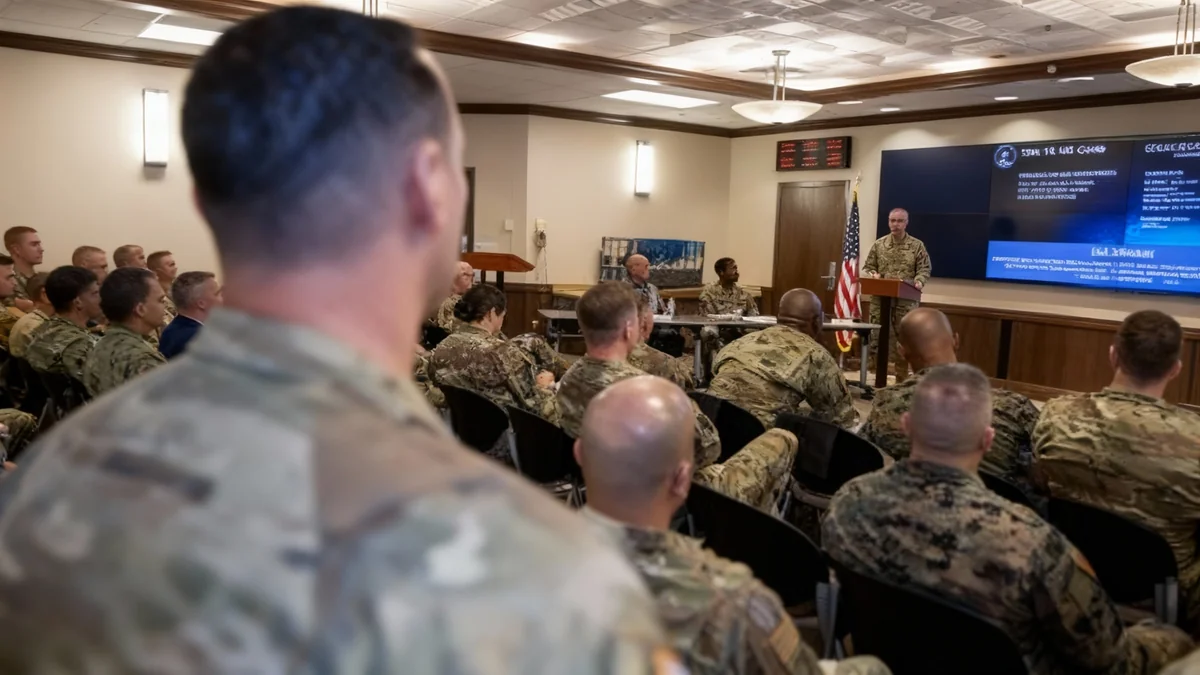
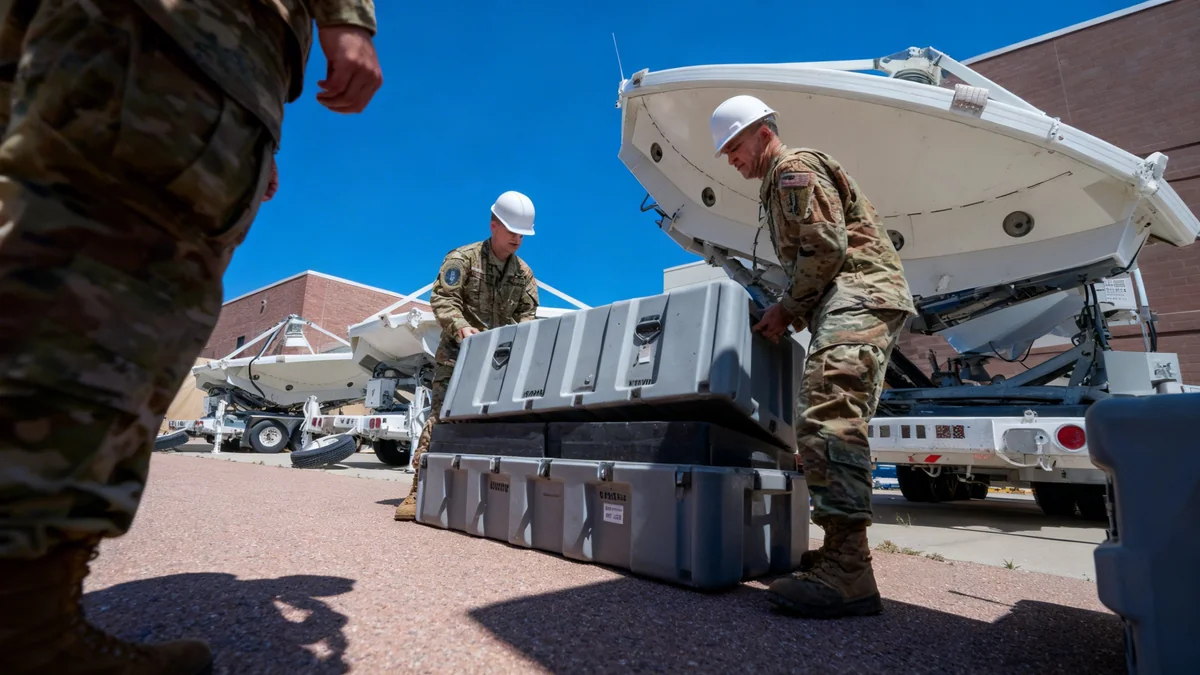



U.S. Space Command is taking an unprecedented step by inviting commercial space companies to participate in classified wargames for the first time. The initial exercises, set to begin in March, will simulate the response to a potential deployment of weapons of mass destruction in orbit, a scenario prompted by growing concerns over new threats in space.
This move highlights the deepening integration between the U.S. military and the private sector, which now owns and operates a significant portion of the infrastructure in orbit. The collaboration aims to strengthen national security by planning for high-stakes scenarios that could impact global economies and communications.
Key Takeaways
- U.S. Space Command will hold its first-ever classified tabletop exercises with commercial space companies.
- The initial wargame, scheduled for March, will focus on the threat of weapons of mass destruction (WMD) in space.
- The initiative is driven by reports of Russia's potential development of a nuclear anti-satellite capability.
- A nuclear detonation in space could have indiscriminate and devastating effects on military, commercial, and civilian satellites worldwide.
A New Era of Public-Private Defense Planning
The decision to bring commercial partners into sensitive national security discussions marks a significant shift in U.S. space defense strategy. Gen. Stephen Whiting, the commander of U.S. Space Command, announced the initiative at the SpaceCom Space Mobility conference, emphasizing the critical role private industry plays in the space domain.
"We look forward to participation by some of these companies and others in our first ever commercially integrated classified tabletop exercise," Gen. Whiting stated. This collaboration is seen as a logical progression, given the military's increasing reliance on commercial satellites for communication, navigation, and intelligence.
The exercises will be held quarterly with a select group of companies. By involving commercial operators directly in the planning process, Space Command aims to develop more robust and realistic response strategies to potential crises.
The Growing Dependence on Commercial Space
The modern space landscape is dominated by private companies. From satellite internet constellations to launch services, the commercial sector drives much of the innovation and owns a large share of the assets in orbit. This reality means that any conflict in space would inevitably affect commercial interests, making public-private partnership essential for national and economic security.
Focus on an Unthinkable Scenario
The first exercise will tackle a particularly alarming threat: the deployment of a nuclear weapon in space. U.S. officials have raised concerns that Russia may be developing such a capability, designed not for terrestrial attack but to disable vast numbers of satellites simultaneously.
"A nuclear detonation in outer space would cause devastating consequences for the United States, the world and the global economy," Gen. Whiting explained. He described the exercise as an opportunity to "look at this future that none of us want to happen."
While U.S. officials have clarified there is no evidence that an operational nuclear weapon is currently in orbit, the development of such a system is considered a destabilizing threat that requires proactive planning.
The goal is to think through the cascading effects and coordinate a response with the commercial entities whose assets would be at risk. "We’ll have a representative body of civilian companies there that can help us with that thinking," Whiting added.
Indiscriminate Destruction
A nuclear detonation in space would release a powerful electromagnetic pulse (EMP) and intense radiation. This could instantly disable or destroy unprotected electronics on satellites across a wide area of low Earth orbit. The blast would affect military, civilian, and commercial satellites from all nations without distinction.
The Science and Law of Space Weapons
The prospect of a nuclear weapon in space directly challenges long-standing international agreements. The 1967 Outer Space Treaty, a cornerstone of space law, explicitly prohibits placing nuclear weapons or other WMDs in orbit around Earth.
What the Treaty Forbids
The treaty's ban is specific and has limitations. It focuses on WMDs and does not prohibit other types of military activity in space. This has allowed for the development of other counterspace capabilities, including:
- Anti-satellite (ASAT) missiles: Weapons designed to physically destroy satellites.
- Electronic warfare: Systems that jam or interfere with satellite signals.
- Cyber operations: Attacks targeting the ground stations and software that control satellites.
A nuclear device, however, falls squarely into the category of a weapon of mass destruction. Its deployment would be a clear violation of international law.
Long-Term Consequences of a Space Detonation
Beyond the immediate destruction of satellites, a high-altitude nuclear explosion would have lasting effects. It could create artificial radiation belts around the Earth, composed of charged particles trapped by the planet's magnetic field.
These belts could persist for months or even years, degrading the electronic components of any satellite that passes through them. This would effectively render large regions of space unusable, a concept known as area denial. The long-term contamination of critical orbits would cripple global infrastructure that relies on space, from GPS and financial transactions to weather forecasting and communications.
Preparing for a Contested Domain
The initiative to include commercial firms in wargames reflects a broader recognition within the Pentagon that space is no longer a peaceful sanctuary. It is now considered a contested military domain, similar to land, sea, and air.
As nations develop and test more sophisticated counterspace weapons, the U.S. military is adapting its strategy to protect both its own assets and the commercial infrastructure it depends on. This new series of classified exercises is a proactive step to ensure that the U.S. and its private partners are prepared to face emerging threats together.
"While we wish that that would not happen, we’ve got to plan against the possibility," said Gen. Whiting. "And we would do that in partnership with our commercial space companies because so much of the American economy is dependent on space."