



The U.S. Space Force has awarded its latest round of national security launch contracts, with SpaceX securing five of the seven available missions. United Launch Alliance (ULA) received the remaining two contracts. An analysis of the contract values reveals a significant price difference between the two launch providers and highlights a trend of increasing costs for ULA's Vulcan rocket.
Key Takeaways
- SpaceX was awarded five national security launch missions for a total of $714 million.
- United Launch Alliance (ULA) received two missions valued at $428 million.
- The average cost per launch is approximately $143 million for SpaceX and $214 million for ULA.
- ULA's price per mission has risen from an average of $112-$119 million in 2023 to $214 million in this latest round.
- Four of the five SpaceX missions will utilize the powerful Falcon Heavy rocket, indicating a growing need for heavy-lift capability.
Details of the NSSL Phase 3 Awards
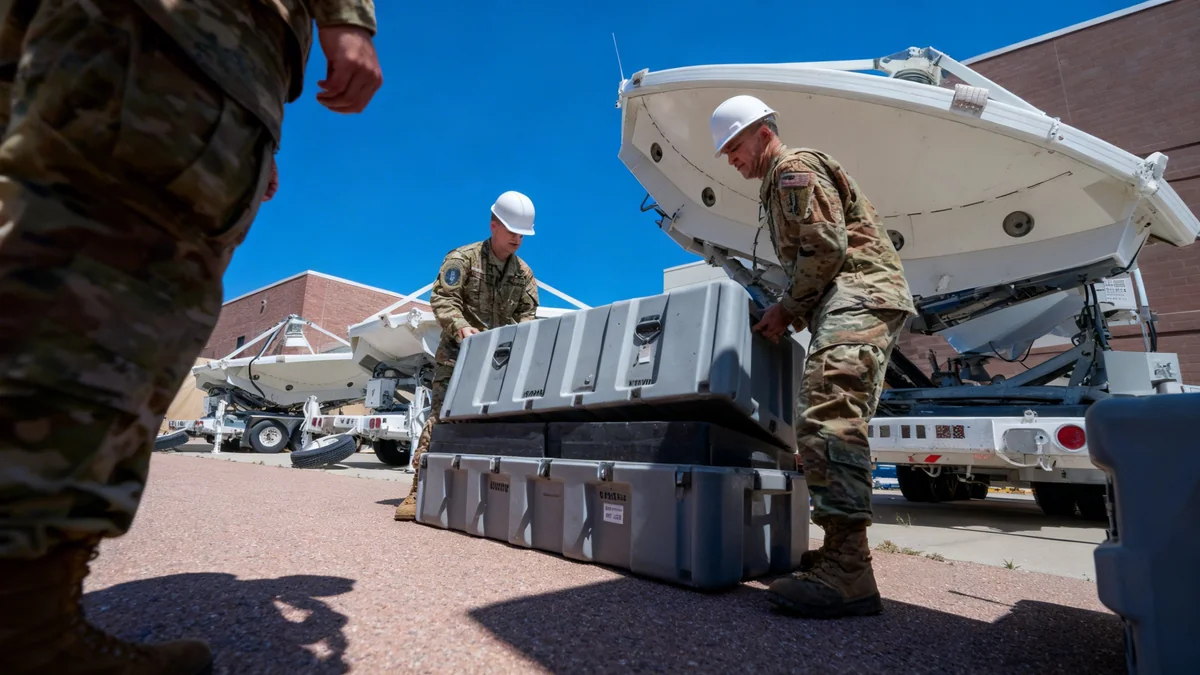
The U.S. Space Force's Space Systems Command announced the contract distribution on Friday as part of its National Security Space Launch (NSSL) Phase 3 program. These missions are critical for deploying the nation's most sensitive intelligence and military satellites.
SpaceX will launch five missions for a total of $714 million. This brings the company's average price to about $143 million per launch. In contrast, ULA, a joint venture between Boeing and Lockheed Martin, secured two launches for $428 million, resulting in an average cost of $214 million per mission.
This means the U.S. government is paying approximately 50% more for each ULA launch compared to a SpaceX launch in this contract cycle. The missions are scheduled to take place over the next few years.
"Space is the ultimate high ground, critical for our national security," stated Col. Eric Zarybnisky, the program executive officer for Assured Access to Space. "With this year's NSSL Phase 3 Lane 2 mission assignments, we continue to assure access to that high ground."
The NSSL Program Framework
The NSSL program is designed to provide the Department of Defense with reliable and competitive launch services for its most important space assets. In the current Phase 3 contracting period, SpaceX and ULA are the two primary providers certified to fly these missions. Blue Origin's New Glenn rocket is also included in the program but must complete certification flights before it can be assigned missions.
Analyzing the Cost Discrepancy
The price difference between the two providers is notable, but what stands out more is the recent trajectory of ULA's launch costs. The current price of $214 million per launch is consistent with ULA's pricing in the previous contract round.
However, this represents a substantial increase from just a few years ago. In late 2023, the Space Force awarded ULA a contract for 11 launches at an average cost of $119 million each. A few months prior, another deal for six launches averaged $112 million per mission.
In comparison, SpaceX's pricing for military launches has remained relatively stable in recent awards. This cost control is often attributed to the company's rocket reusability, particularly the recovery and refurbishment of its Falcon 9 and Falcon Heavy boosters. ULA's Vulcan rocket is an expendable launch vehicle.
Phase 2 Contract Comparison
During the NSSL Phase 2 contract period (2020-2024), ULA's 26 launches averaged $173 million per mission. SpaceX's average price during that same period was higher, at $182 million per mission. However, SpaceX's Phase 2 funding included significant one-time costs for ground infrastructure upgrades and the development of a larger payload fairing for its Falcon Heavy rocket.
The Government Premium for Space Access
It is important to note that the prices for NSSL missions are not directly comparable to those charged for commercial satellite launches. The U.S. government pays a premium for its space access, which covers a range of additional services and requirements.
These additional costs include:
- Increased Oversight: Government agencies have deep insight into the launch provider's processes, including inspections, flight data reviews, and risk assessments.
- Mission Assurance: Unlike commercial customers who typically buy launch insurance, the government self-insures its multi-billion dollar payloads. This requires extensive verification and validation from the launch provider.
- Security: Enhanced security protocols are required for handling classified national security payloads.
- Priority Scheduling: Government missions often receive priority placement on the launch manifest.
These factors contribute to the higher overall cost of national security launches compared to the commercial market.
Mission Assignments and Heavy-Lift Demand
A significant detail in this year's awards is the heavy reliance on SpaceX's Falcon Heavy rocket. According to Lt. Col. Kristina Stewart at Space Systems Command, four of the five missions assigned to SpaceX will use the triple-booster Falcon Heavy. Only one will use the workhorse Falcon 9.
This marks the first time that a majority of the annual NSSL launch orders have required the heavy-lift capability of the Falcon Heavy, signaling a trend toward larger and more massive national security satellites. ULA's Vulcan rocket can be configured with two, four, or six solid rocket boosters to increase its lift capacity for different mission profiles.
Breakdown of Awarded Missions
The seven missions assigned in this round are designated for the Space Force and the National Reconnaissance Office (NRO):
- USSF-149: A classified payload launching on a SpaceX Falcon 9 from Florida.
- USSF-63: A classified payload launching on a SpaceX Falcon Heavy from Florida.
- USSF-155: A classified payload launching on a SpaceX Falcon Heavy from Florida.
- USSF-205: The WGS-12 communications satellite on a SpaceX Falcon Heavy from Florida.
- NROL-86: A classified payload on a SpaceX Falcon Heavy from Florida.
- USSF-88: The GPS IIIF-4 navigation satellite on a ULA Vulcan VC2S (with two solid rocket boosters) from Florida.
- NROL-88: A classified payload on a ULA Vulcan VC4S (with four solid rocket boosters) from Florida.
The selection of SpaceX for the majority of these contracts continues a trend established by the Space Force, which aims to leverage a competitive launch market to ensure access to space while managing costs for the American taxpayer.