


White House Press Secretary Karoline Leavitt has relocated to the traditional, high-profile office historically assigned to her role. The move follows the departure of Taylor Budowich, President Trump's deputy chief of staff for communications, who had previously occupied the space.
Key Takeaways
- Karoline Leavitt, the White House Press Secretary, has moved into the traditional press secretary's office in the West Wing.
- The office was vacated by Taylor Budowich upon his departure from the Trump administration this week.
- In Washington D.C., West Wing office assignments are often seen as indicators of influence and access to the president.
- Leavitt, along with Communications Director Steven Cheung, is expected to absorb some of Budowich's former responsibilities.
A Significant Office Change in the West Wing
An important shift has occurred within the White House's West Wing, as Press Secretary Karoline Leavitt now occupies the office traditionally reserved for the president's chief spokesperson. This space became available after Taylor Budowich ended his tenure as deputy chief of staff for communications and cabinet affairs.
For the initial months of the current term, Leavitt and White House Communications Director Steven Cheung worked from smaller, nearby offices. Budowich, in his capacity, used the larger, more prominent press secretary's suite.
According to two sources familiar with the matter, Leavitt and Cheung will now share some of the duties previously managed by Budowich. As of this week, a formal replacement for Budowich's role has not been announced.
The Importance of White House 'Real Estate'
Within the highly competitive environment of the West Wing, physical office space is more than just a place to work. Proximity to the Oval Office is often equated with influence and access to the president. An office's size, location, and historical precedent can signal an official's standing within the administration's hierarchy.
The Traditional Press Secretary's Suite
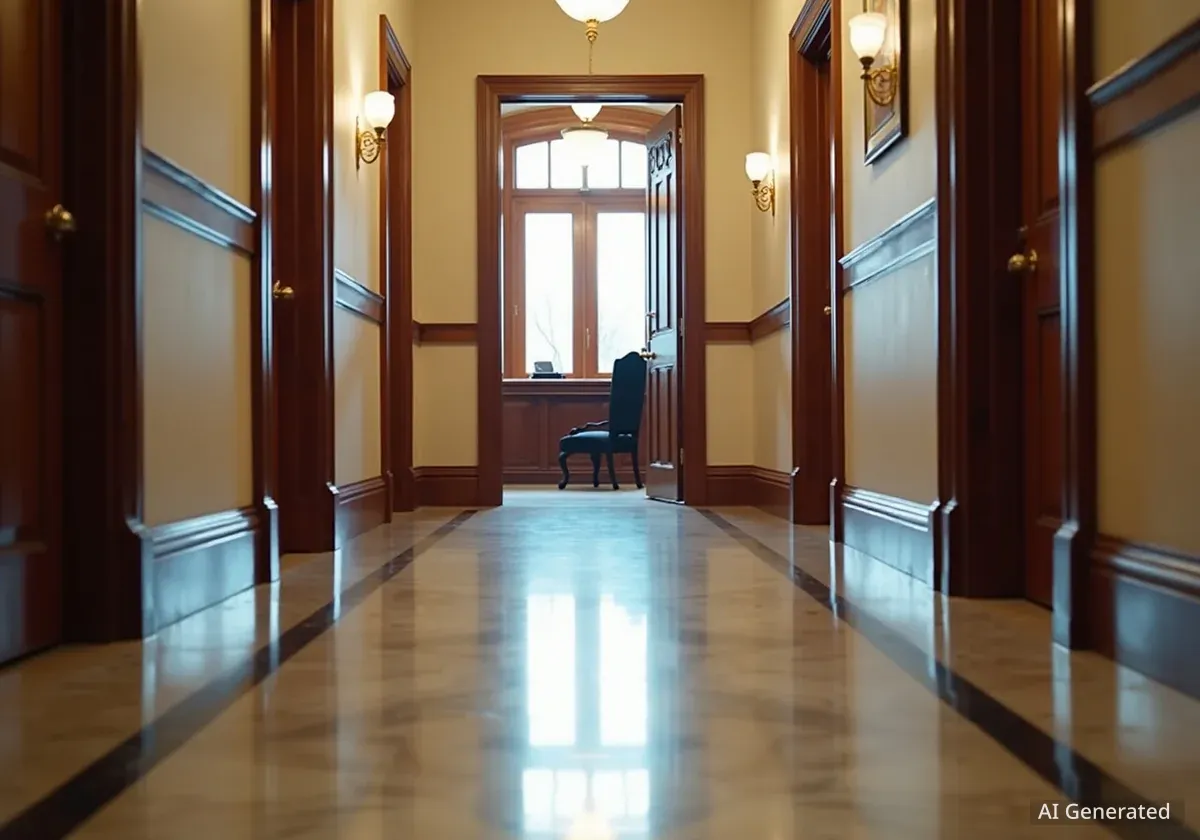
The office Leavitt has moved into is one of the most desirable in the West Wing. It is a spacious room that features a fireplace and offers a direct view of the White House's north driveway. This vantage point allows its occupant to see individuals entering and exiting the building, providing a unique awareness of daily activities.
Its location is also strategic, situated just down the hall from the Oval Office. This proximity facilitates quick communication and access to the president, which is critical for the press secretary's role.
Historically, this office has been a fixture for the position. During President Trump's first term, all four of his press secretaries—Sean Spicer, Sarah Huckabee Sanders, Stephanie Grisham, and Kayleigh McEnany—worked from this same room. The recent arrangement with Budowich occupying it was a departure from that tradition.
A Return to Precedent
The move realigns the current administration with a long-standing White House tradition. The press secretary's occupation of this specific office dates back decades, as seen in historical photos featuring predecessors like James Brady during the Reagan administration meeting with journalists in the very same space.
Leavitt's Background and Ascending Role
At 28 years old, Karoline Leavitt holds the distinction of being the youngest person to ever serve as White House Press Secretary. Her appointment to the role followed her successful tenure as the national press secretary for President Trump's 2024 campaign.
Leavitt is already familiar with the White House press operations, having previously served in the press office during Trump's first term. This background provided her with foundational experience in managing the administration's communications and media relations.
With the departure of Budowich, Leavitt's responsibilities are set to expand. She and Steven Cheung are expected to take on a broader portfolio of communications duties, further solidifying their roles in the administration's public-facing strategy. White House spokespeople have declined to provide an official comment on the internal office changes.