
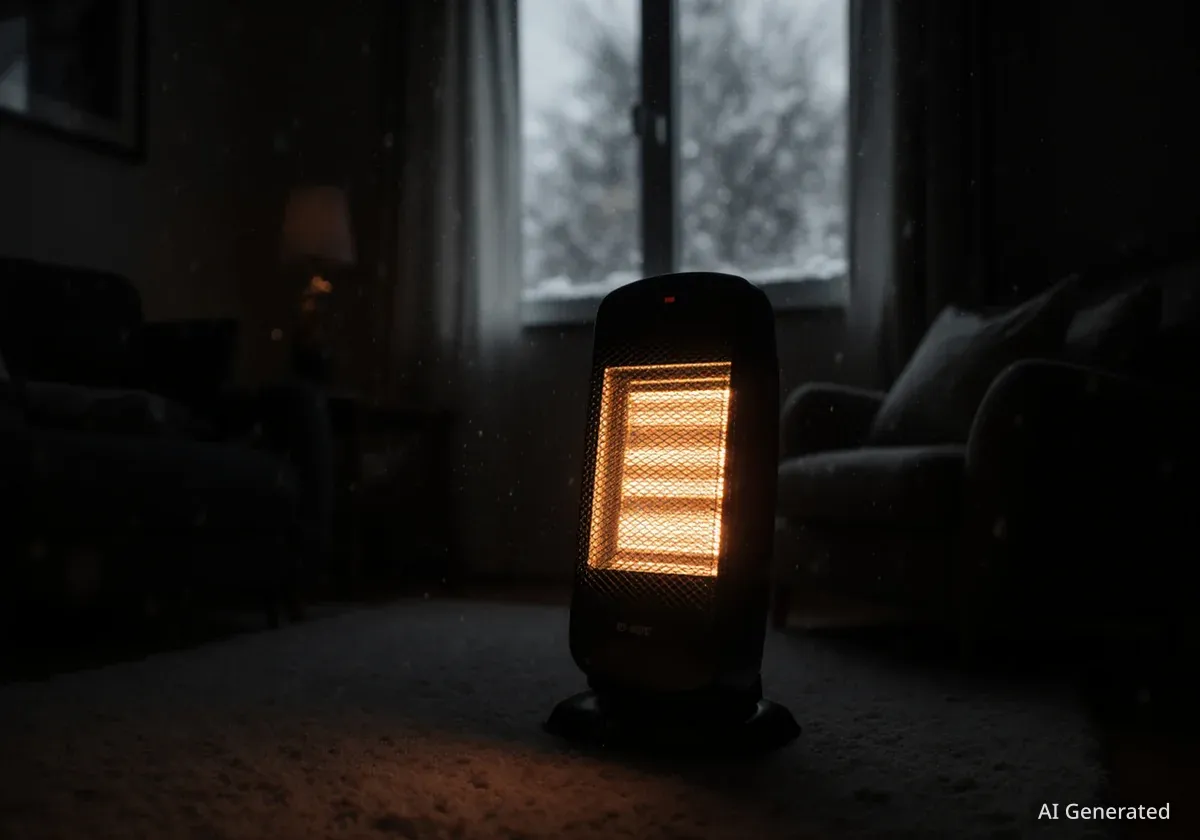


As temperatures drop, many households turn to space heaters and portable generators for extra warmth and power. While effective, these devices come with significant risks if not used correctly. Statistics show that space heaters are a factor in approximately one-third of all home heating fires, making proper safety practices essential.
Understanding the fundamental rules for operating these appliances can prevent property damage, injury, and even fatal accidents. Following expert recommendations on placement, power supply, and maintenance is critical for keeping your family safe during a cold snap.
Key Takeaways
- Always keep space heaters at least three feet away from flammable materials like furniture, curtains, and bedding.
- Never plug a space heater into an extension cord or power strip; it must be plugged directly into a wall outlet.
- Generators must only be operated outdoors and at least 20 feet away from the house to prevent carbon monoxide poisoning.
- Look for space heaters with safety features like automatic shut-off for overheating and tip-over protection.
The Hidden Dangers of Portable Heaters
Portable electric space heaters are a convenient way to warm up a chilly room, but their convenience can mask serious fire hazards. The primary danger comes from placing them too close to combustible items. Materials like bedding, clothing, furniture, and curtains can ignite if they are within the recommended three-foot safety zone.
Another common mistake is how they are powered. Space heaters draw a significant amount of electricity, which can overload extension cords and power strips not designed for such a high load. This can cause the cord to overheat and start a fire.
Alarming Statistic
According to safety experts, portable space heaters are involved in one out of every three home heating fires. They are also linked to a high percentage of fire-related deaths, underscoring the importance of correct usage.
To mitigate these risks, always place your heater on a stable, flat surface where it won't be easily knocked over. Keep them out of high-traffic areas and away from the reach of children and pets who might accidentally tip them over or get too close.
Choosing the Right Heater for Your Needs
Not all space heaters are created equal, and selecting the right one depends on your specific needs and safety concerns. Modern heaters often come with crucial safety certifications and features that can significantly reduce risk.
Key Safety Features to Look For
When purchasing a new space heater, prioritize models that include the following:
- Automatic Shut-Off: This feature turns the unit off if it starts to overheat or if it is accidentally tipped over.
- Cool-Touch Exterior: For households with small children or pets, a heater that remains cool to the touch is a much safer option.
- Sturdy Base: A wide, stable base helps prevent the unit from being easily knocked over.
Paul Hope, a home editor at Consumer Reports, advises consumers to consider the heater's purpose. “You need to consider whether you’re just trying to warm yourself up or whether you’re trying to heat an entire room,” he stated. “Our tests show that not all models can do both.”
Heater Types and Recommendations
Different models excel in different situations. For example, the Vornado brand is often cited for its excellent performance in spot heating, warming a single person effectively. For heating an entire room, a model like the Comfort Zone, which costs around $50, performs well in safety tests but can run hotter on its surface. For families with safety as a top priority, the Lasko Bladeless Tower (around $100) provides good room and spot heating while staying cooler to the touch.
Generator Safety is a Matter of Life and Death
During power outages, portable generators can be a lifeline, but they produce carbon monoxide (CO), a colorless, odorless gas that can be fatal. This is why the single most important rule of generator use is to never operate one indoors.
Understanding Carbon Monoxide Risk
Carbon monoxide displaces oxygen in the blood, leading to poisoning and death within minutes at high concentrations. Operating a generator in a garage, basement, or even near an open window or vent can allow deadly levels of CO to accumulate inside a home.
To ensure safety, follow these strict guidelines:
- Operate Outdoors Only: Place the generator at least 20 feet away from your house, with the exhaust pointing away from all doors, windows, and vents.
- Keep it Dry: Protect the generator from rain and snow, as moisture can create an electrocution hazard. Operating it under an open, canopy-like structure on a dry surface is recommended.
- Perform Maintenance: If you have an older generator, test it before you need it to ensure it is running properly. Check fuel and oil levels.
- Use Heavy-Duty Cords: Plug appliances directly into the generator using heavy-duty, outdoor-rated extension cords that are appropriate for the appliance's power draw.
By adhering to these simple but critical safety rules for both space heaters and generators, you can effectively manage the risks and keep your home warm and safe throughout the coldest months of the year.