


The Seattle area, long recognized as a global hub for software and cloud computing, is experiencing a significant shift in its venture capital landscape. A new class of startups focused on space technology, fusion energy, and advanced batteries is now attracting the region's largest investment rounds, signaling a pivot toward complex, hardware-based innovation.
Companies in these emerging sectors have secured more than two billion dollars in funding over the past year, reshaping the Pacific Northwest's reputation and building on its deep-rooted engineering legacy from giants like Boeing and Microsoft.
Key Takeaways
- Seattle's venture capital focus is expanding from software to "hard tech" sectors like space, fusion, and advanced batteries.
- Four key companies—Stoke Space, Group14, TerraPower, and Helion—have raised a combined total of over $2.2 billion in recent funding rounds.
- Total venture capital raised in the Pacific Northwest during the third quarter reached nearly $1.3 billion.
- The trend is supported by the region's existing engineering talent pool, federal climate incentives, and growing investor interest in transformative technologies.
Seattle's Evolving Innovation Landscape
For decades, Seattle's technology ecosystem was defined by software and e-commerce. The influence of Microsoft and Amazon created a fertile ground for startups developing enterprise software, cloud services, and online retail solutions. Many of the region's most successful entrepreneurs began their careers at these two companies.
However, recent investment data reveals a clear diversification of this economy. The latest wave of high-growth companies is tackling challenges in the physical world, from building fully reusable rockets to creating novel energy sources. This evolution represents a new chapter for the region, leveraging a different set of skills and resources.
From Software to Hardware
The term "hard tech" or "deep tech" refers to companies founded on significant scientific or engineering innovation. Unlike software startups that can often scale with minimal physical infrastructure, hard tech companies require substantial capital for research, development, and manufacturing facilities to create tangible products like rockets, reactors, or advanced materials.
This transition is not happening in a vacuum. It is fueled by a convergence of factors, including a highly skilled workforce with experience in aerospace and advanced manufacturing, thanks to companies like Boeing and Blue Origin. Additionally, federal funding and climate-related financial incentives have made ambitious energy and space projects more attractive to private investors.
The Leading Companies in Hard Tech Funding
Several Seattle-area companies have recently closed major funding rounds, placing them at the forefront of this new technological movement. Their success highlights investor confidence in technologies that have the potential to fundamentally change major industries.
Stoke Space Technologies Aims for the Stars
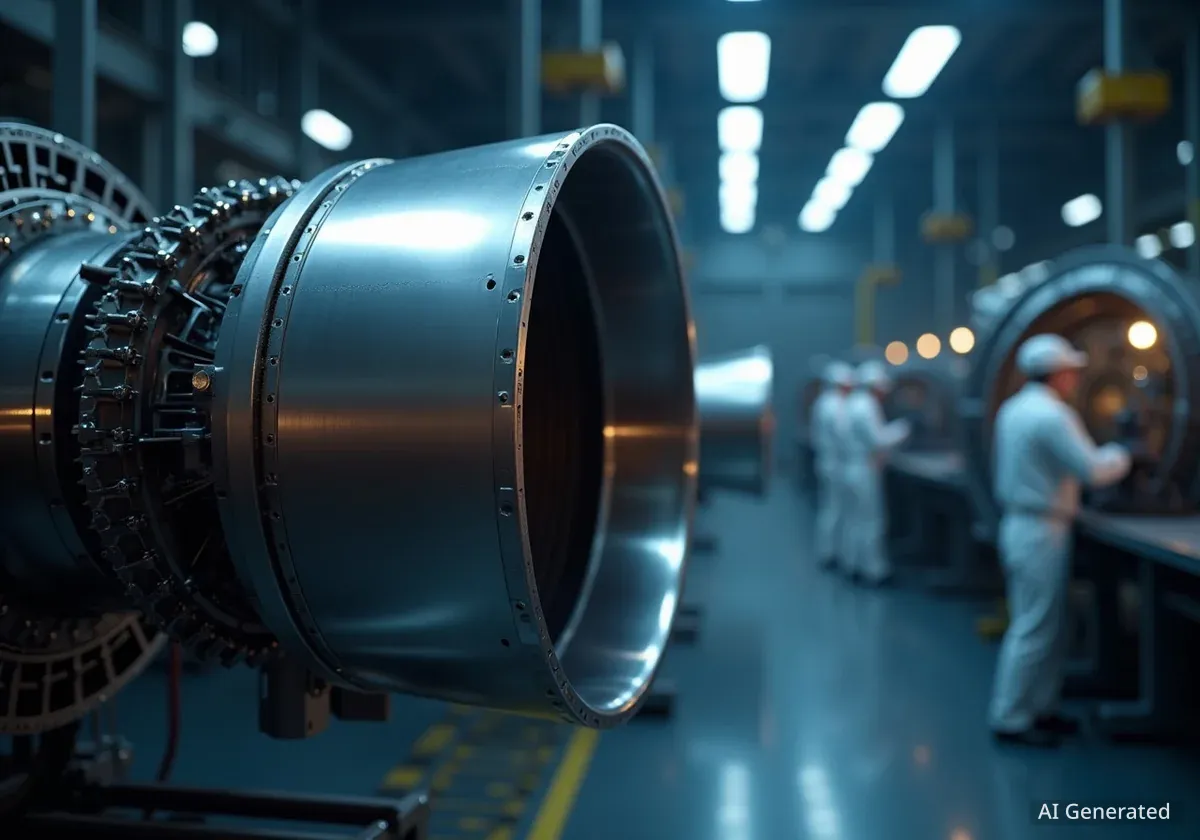
Based in Kent, Washington, Stoke Space Technologies is developing a fully reusable rocket named Nova. The company recently announced a massive $510 million funding round. This new capital injection comes less than a year after a separate $260 million round, bringing its total recent funding to $770 million. The funds are designated to accelerate the development and testing of its innovative launch vehicle.
Group14 Technologies Powers the Future
In Woodinville, Washington, battery technology firm Group14 Technologies secured the largest investment in the Pacific Northwest during the third quarter, raising $463 million. The company specializes in creating silicon anode technology for lithium-ion batteries, which promises to improve battery performance and energy density. This funding will support the expansion of its manufacturing capabilities.
Pacific Northwest Q3 Venture Capital Overview
- Total Raised: Nearly $1.3 billion
- Year-over-Year Change: Down approximately 35%
- Quarter-over-Quarter Change: Down from $1.8 billion in Q2 2025
TerraPower and Helion Pursue Clean Energy
The clean energy sector is another major recipient of investment. TerraPower, a Bellevue-based company co-founded by Bill Gates, raised $650 million in June to advance its work on small modular nuclear reactors. These next-generation reactors are designed to be safer and more efficient than traditional nuclear power plants.
Similarly, Helion Energy raised $425 million earlier in the year for its pioneering work in fusion energy. The company recently broke ground on its first commercial reactor facility in Eastern Washington, aiming to be a leader in the global race to achieve clean, limitless energy through nuclear fusion.
Broader Investment Trends in the Pacific Northwest
While hard tech companies claimed the largest deals, other sectors across the Pacific Northwest also attracted significant venture capital in the third quarter of 2025. The total funding for the region reached nearly $1.3 billion, though this figure represents a decrease from the $1.8 billion raised in the second quarter and a 35% drop compared to the same period last year.
Beyond the headline-grabbing deals in energy and space, several other companies secured substantial funding, reflecting the diversity of the regional economy.
Other Notable Q3 Funding Rounds
A variety of industries, from medical technology to artificial intelligence, saw investment activity:
- Kardium: The Vancouver, B.C.-based medical device company raised $250 million for its system designed to treat atrial fibrillation.
- Sparrow Pharmaceuticals: This Portland, Oregon biotech startup secured $95 million in a Series B round to continue developing its treatment for type 2 diabetes.
- Hubble Network: A Seattle-area space startup, Hubble Network raised $70 million to build out its satellite-powered Bluetooth network.
- Dropzone AI: Specializing in AI tools for cybersecurity, this Seattle startup raised $37 million in a Series B round.
- Augmodo: A Seattle company that produces wearable technology for retail employees, raised $37.5 million in July.
- 4AG Robotics: This British Columbia-based startup, which builds robots to harvest mushrooms, raised $29 million.
This broad range of investments demonstrates that while hard tech is on the rise, innovation continues across multiple sectors in the Pacific Northwest. The region's ability to attract capital for everything from biotech to robotics underscores its dynamic and resilient technology ecosystem.