

A wave of anti-war demonstrations has swept across major international cities, from Washington D.C. to Toronto and Tel Aviv, as citizens voice growing alarm over escalating military actions in the Middle East. These protests coincide with a series of troubling events, including attacks on military bases and damage in civilian areas, fueling fears of a wider regional conflict involving Iran, Israel, and their allies.
The public outcry reflects a deep-seated anxiety about the potential for a devastating war, as scenes of destruction in Beirut and Tel Aviv circulate globally. The convergence of public dissent and military escalation has placed the international community on high alert, with calls for immediate de-escalation echoing from streets around the world.
Key Takeaways
- Anti-war protests have been held in Washington D.C., Toronto, and Tel Aviv, demanding a peaceful resolution to the escalating tensions between Iran and Israel.
- Recent military incidents include an FPV drone attack on a U.S. base in Iraq and reports of significant damage in Tel Aviv and Beirut's southern suburbs.
- The demonstrations highlight a growing international movement of citizens concerned about the humanitarian cost of a potential large-scale war.
- The events underscore the fragile security situation in the Middle East, with multiple actors and locations involved, from Lebanon to Iraq.
International Protests Call for De-escalation
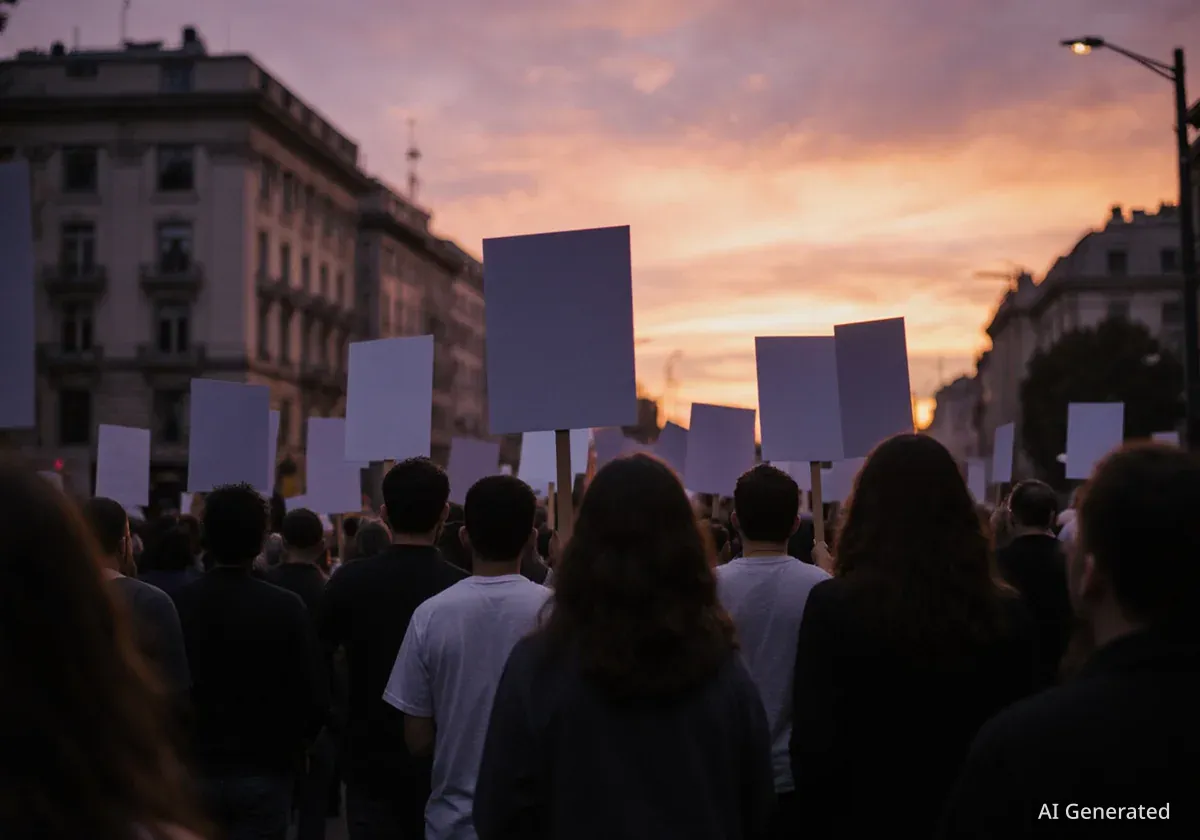
In cities far from the immediate conflict zone, citizens have gathered to make their opposition to war known. Outside the White House in Washington D.C., activists rallied with a clear message against military intervention with Iran, urging diplomatic solutions over armed conflict.
A similar sentiment was on display in Toronto, Canada, where demonstrators participating in an Al-Quds Day rally expanded their focus to call for an end to hostilities involving both Iran and Lebanon. The protests highlight a widespread international concern that the current tensions could spiral out of control, drawing more nations into a destructive war.
Dissent Within Israel
Significantly, the calls for peace are also coming from within the region itself. In Tel Aviv, a notable anti-war protest took place, with participants specifically criticizing the Israeli government's recent attacks targeting Iran. This domestic dissent points to a complex internal dialogue about the country's security strategy and the potential consequences of further military engagement.
These gatherings, though geographically separate, are united by a common theme: a plea for restraint and a warning against the catastrophic human cost of war. They represent a grassroots movement pushing back against the drumbeat of conflict.
Context: A Region on Edge
The recent events unfold against a backdrop of long-standing animosity and a series of shadow conflicts between Iran and Israel. The current escalation represents a dangerous new phase, moving from covert operations to more direct and overt military actions, raising the stakes for the entire Middle East and beyond.
Military Actions Intensify Regional Fears
While citizens march for peace, the situation on the ground remains volatile. Recent incidents have underscored the reality of the escalating conflict and its immediate impact. In Iraq, a U.S. military base was targeted by a first-person view (FPV) drone, a stark reminder of the risks faced by international forces stationed in the region and the sophisticated capabilities of militia groups.
The attack demonstrates the widening scope of the conflict, which is no longer confined to direct exchanges between Iran and Israel but is also playing out through proxy forces across multiple countries.
Civilian Areas Affected
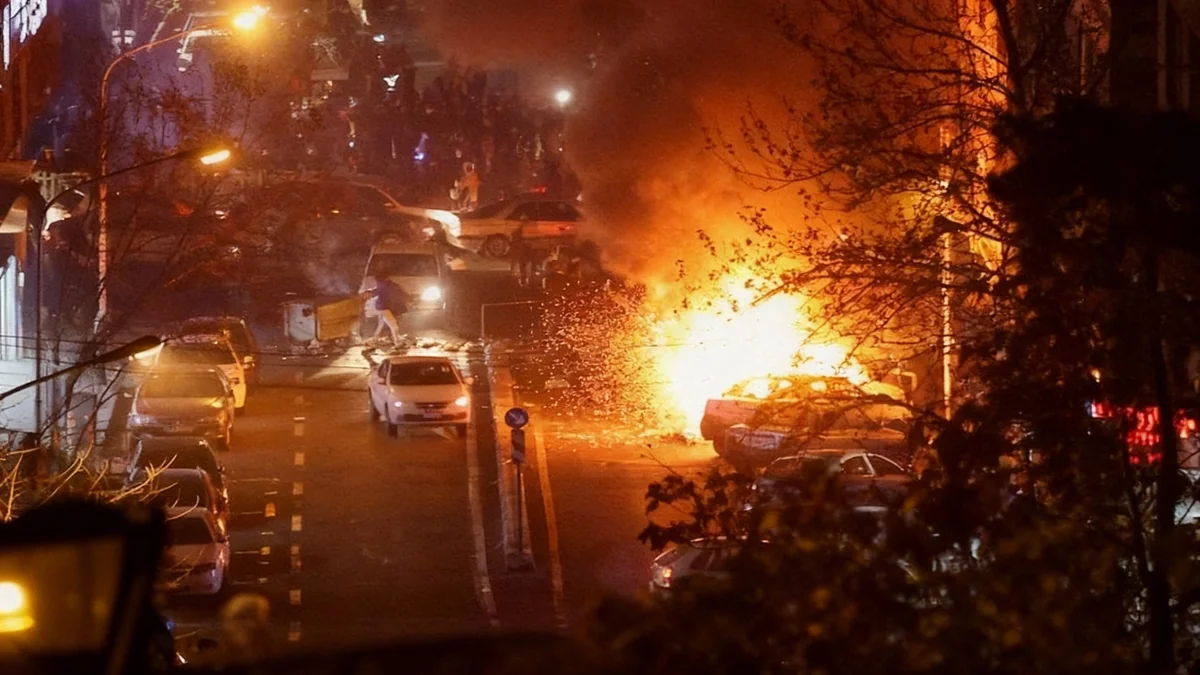
The impact is also being felt in major urban centers. In Tel Aviv, reports emerged of burned and overturned cars, with significant shrapnel damage in one district. Such scenes bring the reality of the conflict directly to the civilian population, creating an atmosphere of fear and uncertainty.
Similarly, smoke was seen rising over the southern suburbs of Beirut, Lebanon, a region with a heavy Hezbollah presence. This development raises concerns about the potential for the conflict to fully engulf Lebanon, a country already facing severe economic and political crises.
The Impact of Modern Warfare
The use of FPV drones represents a significant shift in modern conflict. These relatively inexpensive and highly maneuverable devices can be used to deliver precise strikes, posing a serious threat to even well-defended military installations and challenging traditional air defense systems.
The Human Cost of Conflict
Beyond the geopolitical maneuvering and military strikes, the human toll of the conflict is becoming increasingly apparent. In Iran, a solemn funeral procession was held for an influential defense chief, an event that served as a national rallying point and a symbol of the country's losses.
Such events are often used to galvanize public support for government actions and can contribute to a cycle of retaliation and escalation. The loss of high-ranking officials is felt not just on a strategic level but also on a deeply personal and nationalistic one.
The potential for civilian casualties remains the most pressing concern for international observers and the protesters on the streets. The damage seen in Tel Aviv and the smoke over Beirut are powerful indicators that in any widespread conflict, it is ordinary people who often bear the heaviest burden.
The international calls for peace are ultimately a demand to prioritize human life over strategic objectives. As tensions continue to mount, the world watches and waits, hoping that diplomacy can prevail before the region is pushed further down a path of widespread destruction.