


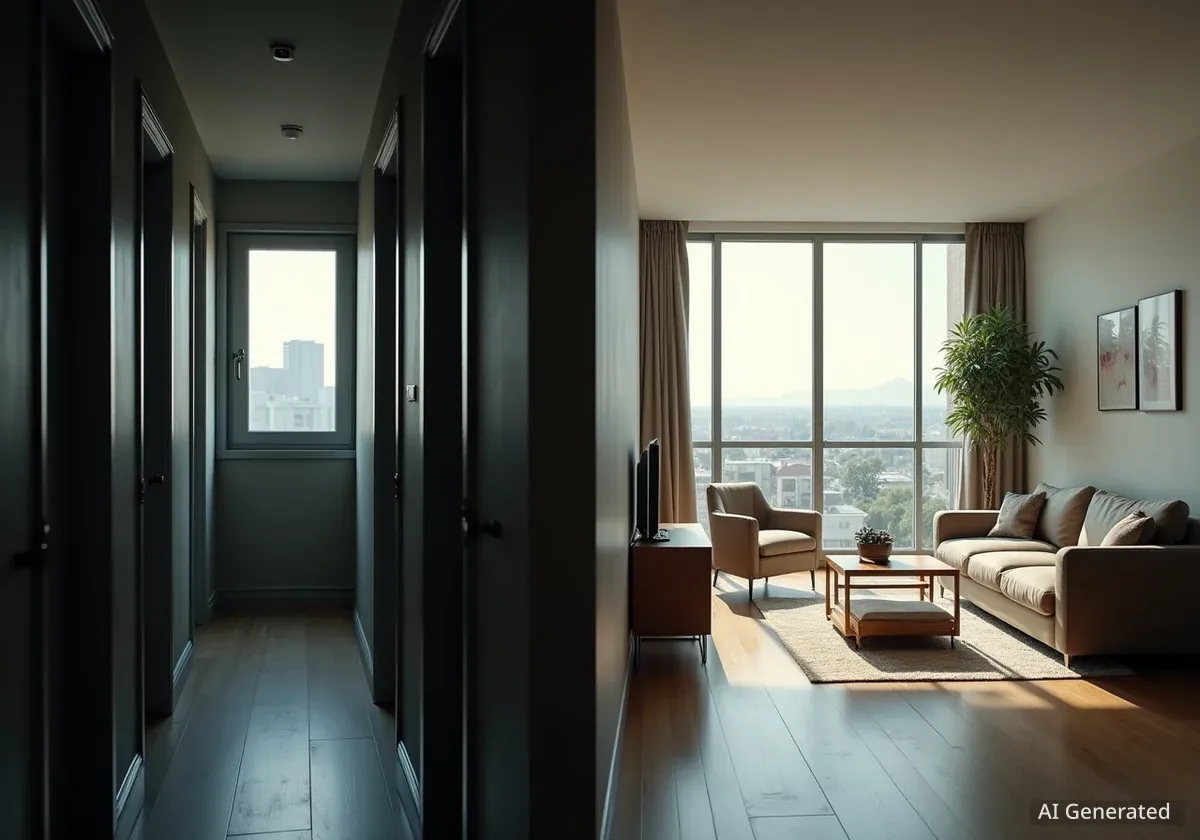


A recent national survey reveals a significant shift in the American housing market, with a growing number of homebuyers prioritizing personal health, community connections, and eco-friendly features over larger homes. The data indicates that rising home prices are accelerating a trend where buyers are increasingly willing to accept smaller living spaces in exchange for a better quality of life.
The America at Home Study, which has gathered responses from nearly 16,000 people since March 2020, shows a sharp increase in buyers accepting trade-offs. This change reflects evolving household demographics and a deeper focus on well-being and efficiency in both home design and neighborhood amenities.
Key Takeaways
- 40% of homebuyers in 2025 are willing to accept a smaller home, nearly double the 21% reported in 2022.
- Wellness features like modern kitchens (29%), efficient insulation (25%), and whole-house water and air filtration (22% each) are top priorities.
- Community amenities focused on nature and connection, such as access to outdoor activities (54%) and walkability (49%), are highly desired.
- The study highlights a mismatch between existing housing stock and the evolving demands of modern buyers, particularly smaller households.
The End of the 'Bigger is Better' Mentality
For decades, the pursuit of a large home with a spacious yard was a central part of the American dream. However, new research suggests this ideal is fading. The latest wave of The America at Home Study, conducted in April 2025, found that 40% of potential buyers would accept a smaller house to enter the market. This figure represents a dramatic increase from just 21% who felt the same way in October 2022.
This trend extends beyond just the main living area. Buyers are also more willing to compromise on other traditionally valued spaces. According to the survey, 33% would accept a smaller garage or no garage at all, up from 22% in 2022. Similarly, 25% are now open to smaller room sizes, a significant jump from 16% previously.
Demographics Driving the Change
A key factor behind this shift is the changing structure of American households. The study notes that a majority of households, at 64%, now consist of only one or two people. These smaller households often find that large, sprawling homes are unnecessary and that their needs can be met with more compact, efficiently designed spaces.
This demographic reality is forcing a re-evaluation of what makes a home desirable. Instead of prioritizing sheer size, these buyers are looking for flexible, multi-purpose rooms that can adapt to their lifestyles, from home offices to personal fitness areas.
About The America at Home Study
The America at Home Study is a recurring national survey that tracks the evolving preferences of American homebuyers. Since its inception in March 2020, it has surveyed nearly 16,000 respondents across four separate waves, providing valuable insights into how priorities have shifted in response to economic and social changes.
A Growing Demand for Wellness and Efficiency
As homebuyers become more comfortable with smaller footprints, they are redirecting their focus and financial priorities toward features that enhance their health and well-being. The survey asked respondents which upgrades they would be most willing to pay for, revealing a clear preference for quality over quantity.
The most sought-after features are those that support a healthier and more sustainable lifestyle. A better-equipped, modern kitchen designed for cooking healthy meals was the top priority for 29% of respondents. This was closely followed by practical, cost-saving upgrades.
Top 5 Desired Home Upgrades
- Modern, well-equipped kitchen: 29%
- High-efficiency insulation, HVAC, and appliances: 25%
- Whole-house water filtration system: 22%
- Whole-house air filtration system: 22%
- Solar battery storage or backup power generator: 18%
These priorities indicate that buyers are thinking long-term. They are not just purchasing a property; they are investing in their health, reducing their monthly utility bills, and lessening their environmental impact. Features like advanced air and water filtration systems, once considered luxury items, are now seen as essential components of a healthy living environment.
"The problem is that a lot of the housing stock isn’t fitting what Americans increasingly say they’re looking for," stated Teri Slavik Tsuyuki, co-founder of the America at Home Study. Tsuyuki is also the co-chair of the Global Wellness Institute’s Wellness Communities & Real Estate Initiative.
The Importance of Community and Connection
The study also found that what surrounds a home is becoming just as important as what is inside it. When asked about community amenities, buyers showed a strong desire for features that foster social connection, physical activity, and access to nature.
The leading desired community feature, cited by 54% of respondents, was access to nature for outdoor activities like hiking and biking. This was followed by walkability to local coffee shops and casual restaurants (49%) and the presence of dedicated trails (48%). Small neighborhood parks with seating and shade (45%) and large open green spaces (44%) also ranked high on the list.
Trading Private Yards for Public Spaces
These findings suggest a fundamental shift in how people view their living environment. Many are willing to trade a large private yard for vibrant, accessible public spaces where they can interact with neighbors and connect with their community.
Belinda Sward, another co-founder of the study and founder of Strategic Solutions Alliance, commented on this trend.
"Today’s consumers are trading space for experience and connection. They’re willing to trade home and yard size for parks, trails and everyday places where they feel known. That sense of everyday connection to nature and neighbors drives values, belonging and well-being while reinforcing their sense of safety—the primary way people define home."
Exploring Alternative Housing Options
Faced with high home prices and a limited supply of desirable properties, buyers are also showing greater openness to non-traditional housing models. The survey revealed a significant increase in the acceptance of alternative paths to homeownership.
Half of all respondents (50%) said they would consider a rent-to-own model, a substantial increase from 33% in 2022. This suggests that buyers are looking for more flexible and accessible ways to get into the housing market.
Furthermore, the stigma once associated with manufactured homes appears to be diminishing. Nearly one-third of buyers (32%) are now willing to consider a modular or manufactured home, up from 22% just a few years ago. This growing acceptance reflects advancements in the quality and design of these homes, which often offer modern features at a more affordable price point.
This data collectively paints a clear picture of a housing market in transition. The modern homebuyer is pragmatic, health-conscious, and community-oriented, valuing quality of life over sheer square footage. As these preferences continue to evolve, the real estate and construction industries will face increasing pressure to adapt to this new reality.