
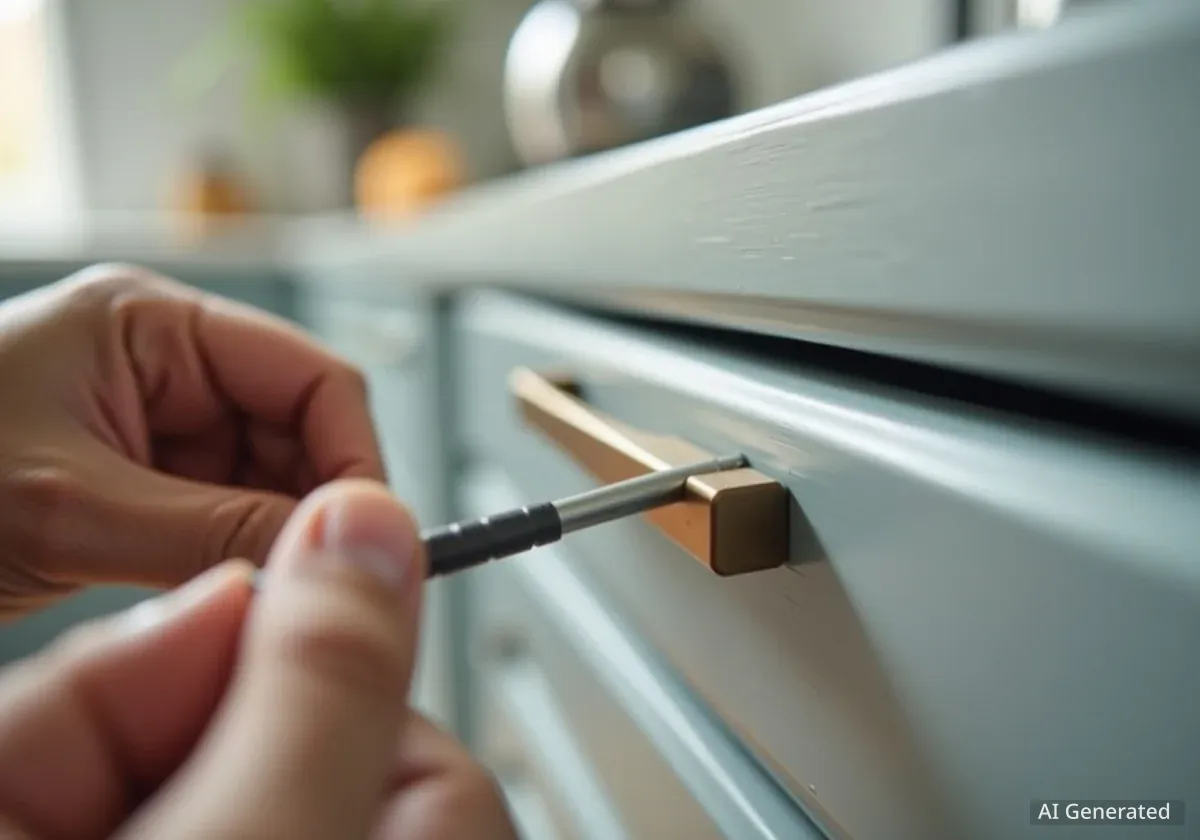



A complete kitchen renovation can be a significant investment of time and money, often involving new cabinets, paint, and appliances. However, interior designers frequently use a simpler, more cost-effective method to refresh a kitchen's appearance: changing the cabinet hardware. This small modification can introduce new textures, colors, and personality into one of the most used rooms in a home.
Experts suggest that selecting the right knobs, pulls, and latches can elevate standard cabinetry to feel custom-made. By focusing on materials, scale, and style, homeowners can achieve a high-impact update without the commitment of a full remodel. This approach allows for personalization and can easily be adapted to changing design trends.
Key Takeaways
- Changing cabinet hardware is a cost-effective way to significantly alter the look and feel of a kitchen.
- Designers recommend choosing hardware with interesting textures, sculptural shapes, or unique materials to add character.
- Current trends include using oversized hardware, mixing different scales and finishes, and opting for unlacquered metals that develop a natural patina.
- For a minimalist aesthetic, recessed or integrated pulls offer a clean, hardware-free look.
- Even subtle additions, such as latch-style hardware, can introduce a layer of charm to simple cabinet designs.
Why Cabinet Hardware Matters in Kitchen Design
While cabinets and countertops form the foundation of a kitchen's design, the hardware acts as the finishing touch that ties the room together. According to designers Amanda Leigh and Taylor Hahn of the Los Angeles-based firm House of Rolison, hardware is one of the most straightforward ways to enhance a kitchen's style.
"It’s the jewelry of the home," explain Leigh and Hahn. "We love choosing knobs and pulls that feel sculptural or textural, so even minimal cabinetry feels custom."
This perspective highlights how hardware can transform a functional element into a decorative statement. A simple set of flat-panel cabinets can be made to look more traditional, modern, or eclectic just by swapping out the knobs and pulls. This makes it an ideal project for homeowners looking for a quick but meaningful change.
Exploring Bold and Oversized Options
One of the most impactful trends in kitchen hardware is the use of oversized pieces. Moving away from small, purely functional knobs, designers are opting for larger hardware that draws the eye and makes a statement. Liz Hoekzema of KLH Homes notes that her studio embraces this approach to personalize a space.
"We have never shied away from statement knobs in a kitchen," says Hoekzema. "They instantly make a space feel personal. Our studio loves to surprise through scale, material selection, and interesting hardware placements to delight the eye in a primarily functional space."
Hoekzema provides a specific example of this philosophy in action, describing a project that used large, donut-shaped white oak knobs sourced from a maker in Slovenia. The knobs were stained to match the custom cabinetry and installed in a unique configuration to create a compelling visual effect. This demonstrates how hardware can become a central design feature rather than just a practical necessity.
Considering Scale and Proportion
When selecting oversized hardware, it is important to consider the scale of your cabinets and the overall size of your kitchen. Very large pulls might overwhelm small drawers, while tiny knobs can get lost on tall pantry doors. A general guideline is that a pull's length should be approximately one-third of the cabinet or drawer's width.
Mixing Materials, Finishes, and Scales
A coordinated, matching look is no longer the only option for kitchen hardware. A more modern approach involves mixing different finishes, materials, and sizes to create a dynamic and layered design. This technique adds visual interest and can help define different zones within the kitchen.
The team at House of Rolison often employs this strategy to add what they call "rhythm" to a kitchen. "We tend to mix finishes and scales for added rhythm—pairing smaller knobs with elongated pulls or using aged brass against moody wood tones," Leigh and Hahn state. This contrast can be particularly effective, making both the hardware and the cabinetry stand out.
Popular Brands for Mixing and Matching
For homeowners interested in this trend, Leigh and Hahn recommend several brands known for their balance of style and quality.
- Emtek: Offers a wide range of styles and finishes, making it easy to find complementary pieces.
- Lo & Co: Known for its refined and modern designs that can be paired together.
- Plank Hardware: Provides approachable yet stylish options suitable for various kitchen aesthetics.
By selecting pieces from brands that offer diverse yet cohesive collections, it becomes easier to create a mixed-hardware look that feels intentional rather than random.
The Appeal of Unlacquered and Living Finishes
Another trend that adds character to a kitchen is the use of unlacquered metals. Unlike sealed or lacquered hardware, these materials are designed to change over time. Metals like unlacquered brass or bronze will develop a natural patina as they react with the environment and are handled, creating a unique, aged appearance.
This appeals to designers who value pieces that evolve. "We like pieces that develop character over time," say Leigh and Hahn. "Unlacquered metals that patina, or hardware with a tactile, handmade feel. A good piece of hardware doesn’t just function—it invites touch, adds soul, and ties the entire palette together." This approach is ideal for kitchens aiming for a lived-in, timeless feel.
What Is a Living Finish?
A "living finish" is a term for a hardware finish that is intentionally left unsealed. Common examples include unlacquered brass, oil-rubbed bronze, and copper. Over time, these surfaces will darken, lighten, and develop unique patterns based on usage and exposure to air and moisture, telling a story of the home's daily life.
Minimalist Approaches to Cabinet Hardware
For those who prefer a sleek and contemporary look, the most effective statement can be to have no visible hardware at all. This is achieved through integrated or recessed pulls, which are built directly into the cabinet doors and drawers.
Barrett Cooke of Arterberry Cooke explains the value of this design choice. "Integrated pulls help modern kitchens feel sleek and intentionally appointed," says Cooke. He describes a project where his firm used a mix of recessed circular pulls and push-latch hardware to create a clean, uninterrupted surface. This minimalist style emphasizes the cabinetry itself and contributes to a clutter-free aesthetic.
Subtle Alternatives for a Traditional Look
If bold hardware feels too dramatic, a subtle change can still make a significant difference. Jeanne Barber, founder of Camden Grace Interiors, suggests incorporating latch-style hardware for a touch of classic charm without overwhelming the design.
"If you’re looking to incorporate statement hardware into your kitchen cabinets, try sprinkling in some latch-style pieces alongside more traditional pulls and knobs," Barber advises. "The latch detail adds a layer of character and charm, making even the simplest cabinetry feel special."
This method allows for a gentle upgrade that adds personality and a custom feel, proving that even small adjustments to kitchen hardware can have a powerful effect on the overall design.