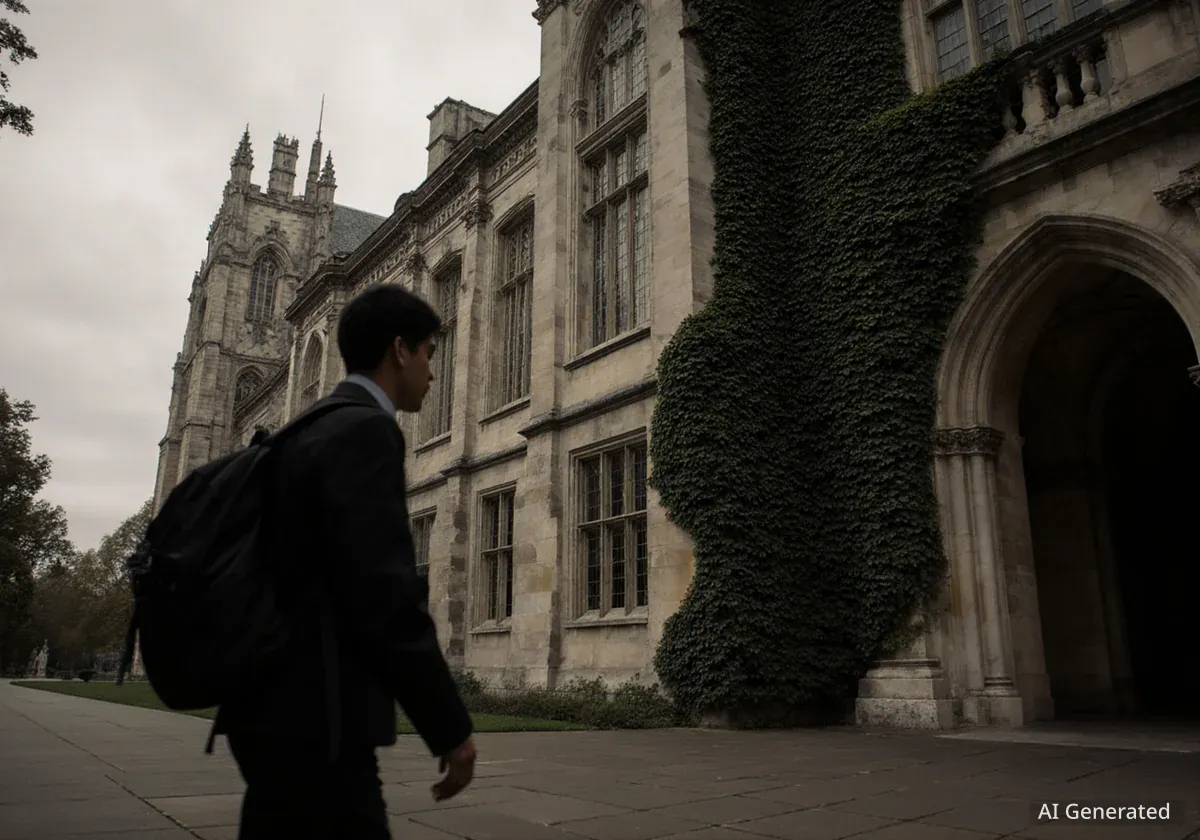

The Department of Defense is overhauling its professional military education system, ending partnerships with several Ivy League and other top-tier universities. The directive, outlined in a recent memo by Defense Secretary Pete Hegseth, will cease Senior Service College fellowship programs at these institutions starting in the 2026-2027 academic year.
The move affects a number of prominent schools, including Harvard, Yale, Princeton, and MIT, signaling a significant shift in the educational landscape for senior military officers. The administration aims to refocus training on what it describes as core warfighting principles and American ideals.
Key Takeaways
- The Pentagon is eliminating several Senior Service College fellowship programs at elite universities, effective from the 2026-2027 academic year.
- Affected institutions include Harvard, MIT, Yale, Columbia, Princeton, Brown, Carnegie Mellon, and Johns Hopkins University.
- Defense Secretary Pete Hegseth cited a need to develop leaders grounded in American founding principles and focused on warfighting capabilities.
- A list of potential new partner institutions includes Liberty University, George Mason University, Clemson, and Baylor.
- The decision could impact existing military research partnerships, such as the Army's AI center at Carnegie Mellon.
A New Direction for Military Education
The policy change was formally announced in a memo that detailed a new vision for professional military education. Defense Secretary Pete Hegseth articulated a clear goal: to reshape how the military's future leaders are trained.
In the memo, he stated the objective is to "develop strategic thinkers through education grounded in the founding principles and documents of the republic, embracing peace through strength and American ideals."
The directive argues for an educational framework that is more closely aligned with national strategies and grounded in realism. Hegseth emphasized a departure from institutions perceived as not contributing directly to military readiness.
"We will no longer invest in institutions that fail to sharpen our leaders’ warfighting capabilities or that undermine the very values they are sworn to defend," Hegseth wrote.
This statement marks a fundamental pivot in the Pentagon's long-standing relationship with some of the nation's most prestigious academic institutions.
Institutions Affected and Proposed Alternatives
The list of schools from which the Pentagon is withdrawing its fellowship programs is extensive and includes some of the most recognized names in higher education. The directive specifically names several Ivy League universities.
Canceled University Partnerships
- Harvard University
- Massachusetts Institute of Technology (MIT)
- Yale University
- Columbia University
- Brown University
- Princeton University
- Carnegie Mellon University
- Johns Hopkins University (School of Advanced International Studies)
The decision to end these programs follows earlier statements from the Pentagon chief about canceling military education fellowships with Harvard specifically. The new memo formalizes and expands this policy to a wider group of schools.
A Shift in Partnerships
In place of the discontinued programs, the memo includes a list of potential new partner universities. This selection suggests a move toward institutions with different academic and cultural profiles. Among the suggested partners are Liberty University, George Mason University, Pepperdine, Clemson, Baylor, and the state university systems of Tennessee, Michigan, Nebraska, and North Carolina.
In a video message posted on social media, Hegseth further explained the rationale, stating, "For decades, the Ivy League and similar institutions have gorged themselves on a trust fund of American taxpayer dollars, only to become factories of anti-American resentment and military disdain."
Potential Impact on Strategic Initiatives
The termination of these academic partnerships raises questions about the future of critical military research and development initiatives. Several of the universities on the canceled list are deeply involved in projects central to modernizing the U.S. military.
A Key AI Hub: The U.S. Army's Artificial Intelligence Integration Center (AI2C) is located at Carnegie Mellon University, a global leader in AI innovation. The center's mission is to connect the Army with top talent in the private sector and accelerate the adoption of AI applications.
The directive's impact on this crucial partnership remains unclear. The AI2C plays a vital role in ensuring the Army remains at the forefront of a technology that is reshaping the modern battlefield. The loss of this direct academic pipeline could create challenges for talent recruitment and innovation.
Similarly, the U.S. Space Force has an established partnership with the Johns Hopkins University School of Advanced International Studies. This program is designed for both intermediate and senior-level officer education, providing specialized training relevant to the space domain.
The long-term effects of severing these ties on the military's access to cutting-edge research and specialized expertise are yet to be seen. Officials from the affected military branches have not yet commented on how they will navigate these changes while maintaining momentum on key technological priorities.
Broader Administrative Changes
This educational overhaul is part of a wider trend within the administration. Recently, the Trump administration also moved to cut ties with Anthropic, a prominent AI company, as a technology provider for the federal government. At the same time, it has sought to expand its relationships with other AI firms like OpenAI and xAI.
Taken together, these decisions reflect a concerted effort to realign the Defense Department's external partnerships—both academic and corporate—with the administration's strategic priorities. The focus is clearly on fostering relationships with organizations perceived to be more in step with its vision for national defense and technological development.
As the 2026-2027 academic year approaches, military leaders and academic institutions will be watching closely to see how this new educational landscape takes shape and what it means for the next generation of officers who will lead the United States armed forces.