

The U.S. Space Force is fundamentally changing how it monitors activity in orbit, moving away from a near-total reliance on classified intelligence. The service is now integrating commercial data and artificial intelligence to track foreign satellites and identify potential threats to American spacecraft, a mission critical to national security.
This strategic shift is being driven by a specialized unit in Colorado Springs, the Space Domain Awareness Tools, Applications and Processing Lab, or SDA TAP Lab. This innovation hub acts as a bridge, connecting private technology firms with the military's most pressing challenges in space.
Key Takeaways
- The U.S. Space Force is increasingly using commercial data and AI for space domain awareness, a departure from its historical reliance on classified sources.
- The SDA TAP Lab in Colorado connects private companies with government problem sets, accelerating the development of new technologies.
- A new organizational structure places the lab under the Kronos program, creating a direct pipeline for innovative tools to become operational.
- This approach aims to shorten decision timelines by using AI to quickly distinguish between normal satellite maneuvers and hostile actions.
A New Era in Space Surveillance
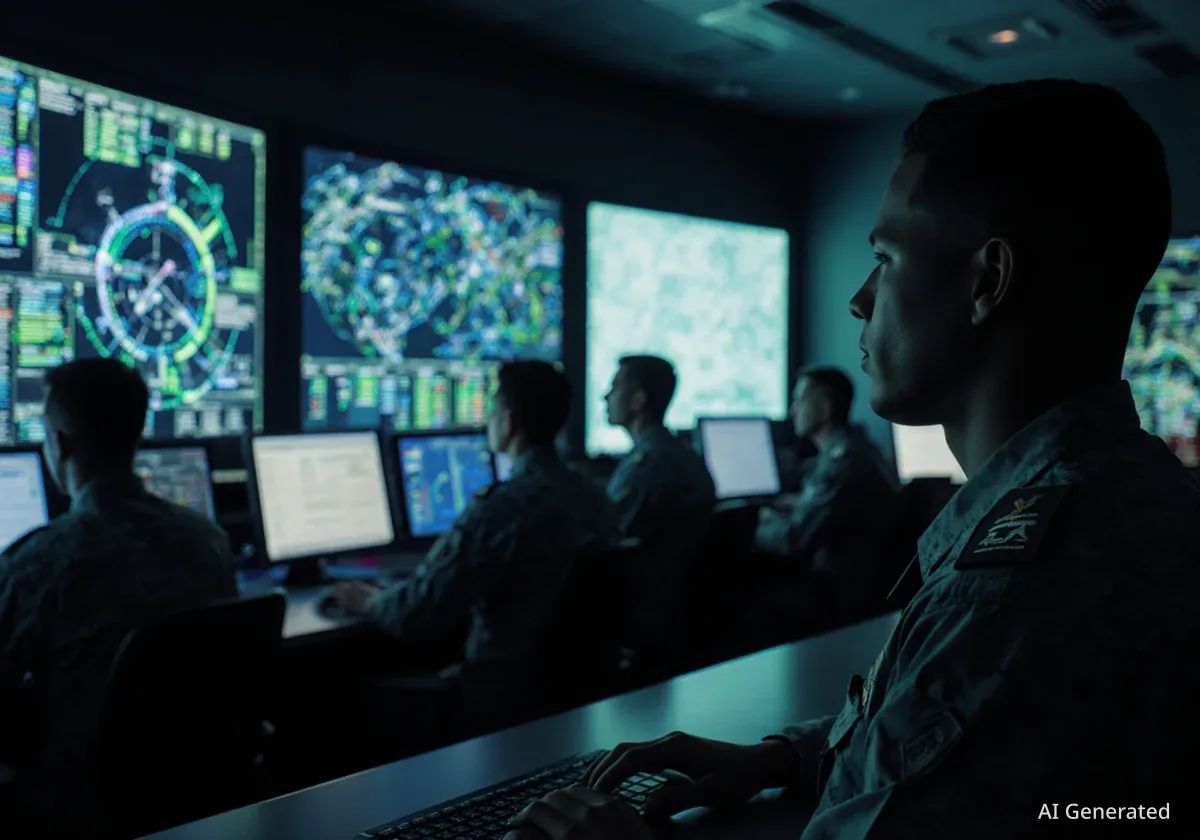
The mission, known within the military as space domain awareness (SDA), is the foundation of orbital defense. It involves seeing what is happening in orbit, understanding the intent behind satellite movements, and deciding how to respond to potential threats. For decades, this has been a world shrouded in secrecy, dependent on government-owned sensors and classified information.
However, the rapid growth of the commercial space industry has created a wealth of new data sources and analytical tools. The Space Force is now actively harnessing this unclassified ecosystem to enhance its capabilities. The goal is to achieve what military planners call avoiding "operational surprise."
What is the 'Kill Chain'?
In military strategy, a "kill chain" refers to the sequence of events required to attack a target. This includes finding, tracking, targeting, and engaging. Many of these steps rely on space-based assets like surveillance, communication, and navigation satellites. By improving its ability to monitor space, the Space Force aims to disrupt an adversary's kill chain before an attack can be executed.
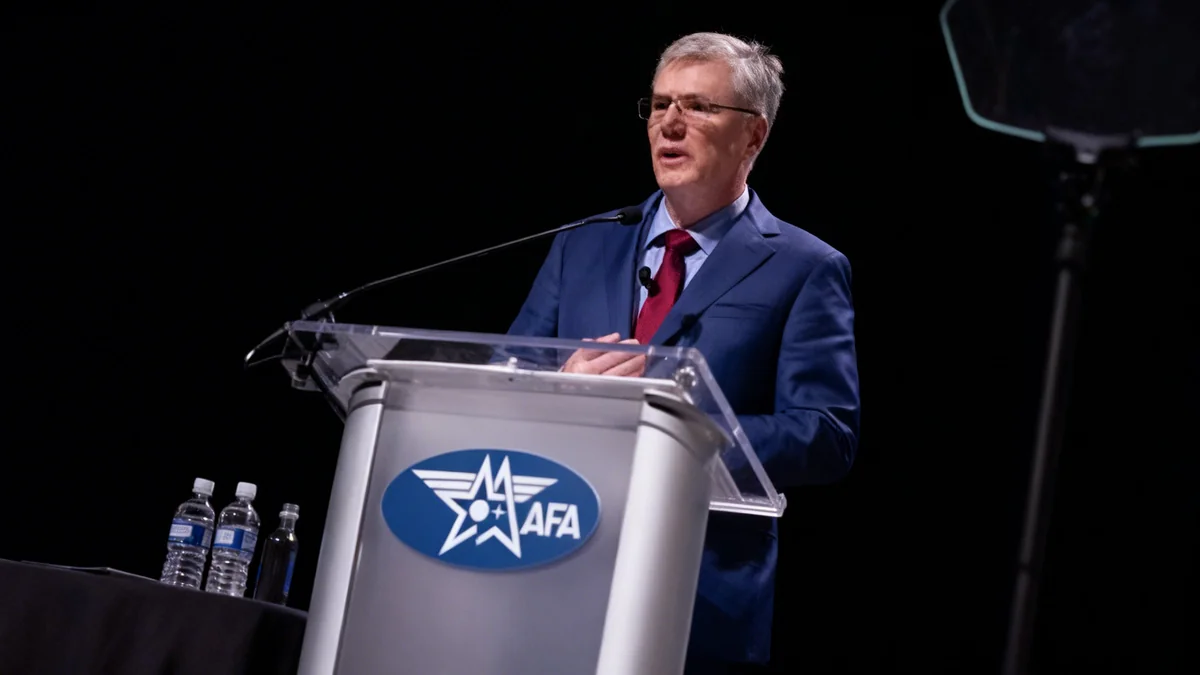
"We have to be able to deny, degrade, damage and destroy their kill chain so that they cannot target our warfighters," stated Lt. Gen. Douglas Schiess, deputy chief of space operations for operations. A core part of this strategy is having the most comprehensive view of the orbital environment possible. "I want as much space domain awareness as there is," Schiess added.
The TAP Lab Innovation Engine
At the heart of this transformation is the SDA TAP Lab. It functions as an accelerator, hosting three-month programs where private companies are given specific government problems to solve. This model allows the Space Force to evaluate a wide range of commercial software, data, and algorithms in a rapid, low-risk environment.
According to Lt. Col. Collin Greiser of Space Systems Command, the results have been significant. Over the past two years, more than 400 companies have participated in the lab's programs. "You just get so much more speed out of that, because you just get ideas that you’re not normally going to consider," Greiser said. He noted that while collaboration can happen in classified settings, it doesn't occur at the "same sense of scale that we get with the lab."
A Demand-Driven Model
The TAP Lab operates on what its chief, Maj. Sean Allen, calls a "demand driven environment." The lab publicly posts its problem statements on its website, currently listing 61 distinct challenges. This transparency allows companies of all sizes to understand the military's needs and propose solutions.
This approach has lowered barriers that previously kept smaller, more agile tech firms out of the defense sector. Tim Bode, a senior architect at Leidos, which provides support to the lab, highlighted the change. "Five years ago, it would have been a blank screen," he said, referring to the public list of problems. For a small company with a specialized capability, this visibility is a game-changer.
A Direct Pipeline to Operations
To ensure the most promising technologies don't get stuck in a cycle of experimentation, Space Systems Command recently made a crucial organizational change. The TAP Lab was moved directly under the oversight of a program called Kronos.
Kronos is what the military calls a "program of record," meaning it is an official, funded effort to deliver a modernized system for space battle management. Its purpose is to fuse data in real time and provide a shared operational picture for U.S. and allied forces.
"By moving the lab underneath Kronos, that has really started that transition... to encourage and build more of an intentional pathway to a program of record."
– Lt. Col. Collin Greiser, Space Systems Command
This move creates a formal bridge from the unclassified, experimental environment of the lab to the highly secure, operational systems used by Space Force guardians. "In the short term my goal is really to boost the amount of capability that we’re taking from the lab and putting it in my program," Greiser explained. Bode described the link as a "huge change" in how quickly new tools can be acquired and fielded.
AI at the Forefront of Orbital Defense
A primary focus of the lab is leveraging artificial intelligence and machine learning. One of the most difficult challenges in space surveillance is determining intent. A satellite changing its orbit could be performing a routine station-keeping maneuver, or it could be moving to threaten another spacecraft.
AI algorithms can analyze vast amounts of tracking data to learn patterns of normal behavior. When a satellite deviates from these patterns, the system can flag it for human analysis much faster than manual methods.
"Then my ability to make predictions about intent is sped up 10x or 100x," said Maj. Allen. As these automated systems become more sophisticated, they can begin to recommend courses of action to operators, dramatically compressing the timeline for making critical decisions.
Siamak Hesar, CEO of Kayhan Space, a company that has participated in the lab, emphasized the shift toward AI-native solutions. "We are building capabilities that are AI first," he said. "And we are still learning what this technology is capable of." This ongoing exploration is building a catalog of validated commercial tools that the Space Force can deploy as new needs arise.
Expanding the Innovation Network
The success of the TAP Lab model has led to its expansion. In addition to its primary location in Colorado and activities in Hawaii, a new node is being established at the University of Texas at Austin. The Texas Space Commission has approved approximately $9.3 million to support the new facility.
This funding will go toward building secure infrastructure, training operators, and running six new accelerator cohorts. The expansion signals a long-term commitment to this public-private partnership model as the cornerstone of the nation's strategy for maintaining security in the increasingly congested and contested domain of space.