
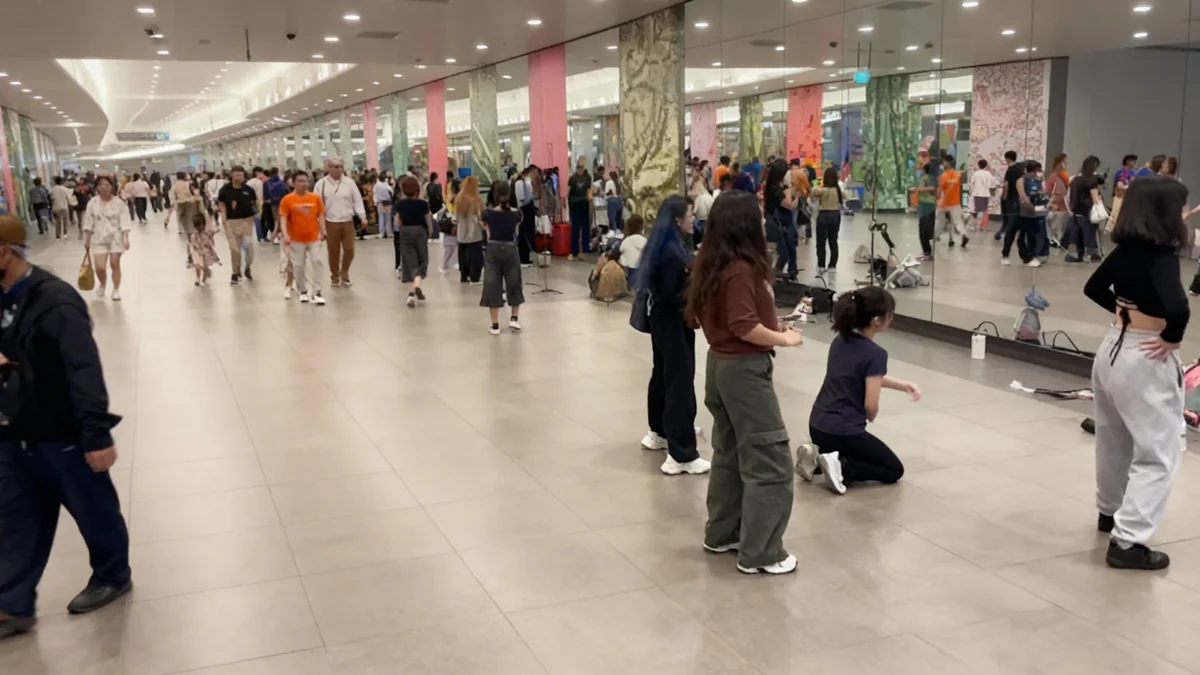




A popular underground walkway in Singapore, long used by dancers as an impromptu practice studio, has become the center of a national debate about public space. On January 1, dancers arrived to find the floor-to-ceiling mirrors they relied on had been frosted over, rendering them useless for practice following complaints from the public.
The decision, made by the management of the privately-owned but publicly-used thoroughfare, has ignited a conversation about order, spontaneity, and who gets to define the purpose of shared spaces in one of the world's most densely populated cities.
Key Takeaways
- Mirrors in a high-traffic pedestrian tunnel near Gardens by the Bay were frosted over on January 1 after complaints about dancers blocking the path.
- The incident has sparked a wider discussion in Singapore about the use of public spaces, the culture of complaining, and the balance between order and organic community activities.
- Urban planning experts and residents are questioning how to accommodate diverse needs in a land-scarce nation known for its meticulous top-down planning.
- The event highlights a recurring tension between Singapore's reputation as a highly efficient 'nanny state' and the desire for more spontaneous, community-driven use of urban environments.
The End of an Unofficial Dance Studio
For years, the wide, well-lit underground passage connecting a train station to Marina Bay Sands and the Gardens by the Bay served a dual purpose. For thousands of commuters and tourists, it was a convenient corridor. But for a vibrant community of aspiring dancers, its mirrored walls made it an ideal, and free, rehearsal space.
The impromptu sessions, often set to K-pop beats, became a familiar sight for passersby. "Seeing other dancers around me was really motivating," said Wilson Tay, who practiced in the walkway twice a week. He noted that the shared energy created a unique, vibrant atmosphere.
"It was also fun when tourists stopped by and tried to mimic my moves."
However, not everyone appreciated the performances. Reports indicate that complaints were filed concerning dancers and their props "blocking pedestrian flow." The walkway is privately owned by Marina Bay Sands (MBS), which stated the mirrors were installed to "enhance the visual appearance and experience" of a path whose "primary function" is for walking.
In response to the complaints, the mirrors were covered with a translucent film. The music and movement that once filled the tunnel have now fallen silent, pushing the dancers to find new, less suitable locations.
A City Built on Order
The conflict over the walkway mirrors is not an isolated incident but rather a symptom of a larger cultural dynamic in Singapore. The nation's development from a small island to a global metropolis is a story of meticulous, top-down urban planning. This approach has resulted in a city renowned for its efficiency, cleanliness, and safety.
Singapore's Concept Plan
Urban design in Singapore is guided by a key document called the Concept Plan, which outlines land use needs 50 years into the future. This long-term strategy, reviewed every five years, is credited with the city-state's efficient infrastructure and high quality of life, but it also contributes to a highly regulated environment.
This emphasis on order has been hailed as a competitive advantage. Prime Minister Lawrence Wong has acknowledged that while Singapore may not have the chaotic energy of New York or Paris, its stability and predictability are valuable assets. Former Prime Minister Lee Kuan Yew famously embraced the "nanny state" label, attributing the nation's success to efficient administration and strict adherence to plans.
However, critics argue this level of control can stifle the very randomness and spontaneity that make a city feel alive. Dutch architect Rem Koolhaas described Singapore as a city that "excludes accident and randomness," where even chaos feels authored.
The Culture of Complaint
The walkway incident also sheds light on what some residents describe as a pervasive culture of complaining, where citizens often turn to authorities to resolve minor conflicts over shared space. This tendency is visible across the city, from disputes over noise to the use of community areas.
Recent examples include:
- Pickleball Noise: Complaints about the sound of pickleball games led authorities to shorten court hours and install noise reminders in some neighborhoods.
- Void Deck Football: In 2016, metal railings were installed in a public housing block's open ground floor, known as a "void deck," to stop children from playing football after noise complaints.
- Community Libraries: A resident who started a community library in her building's void deck faced initial resistance from local officials citing fire hazards and unauthorized furniture.
A Dense Urban Landscape
Singapore is one of the most densely populated countries in the world, with more than 8,300 people per square kilometer. This scarcity of land makes the allocation and use of every public space a critical issue.
This reliance on official intervention means that conflicts are often resolved with new rules or restrictions, rather than community-led compromise. Dr. Tan Shin Bin, an urban planning expert at the National University of Singapore, suggests the key question is not about adding more rules, but "whether the decision was a well-considered and fair one... Whose needs are being prioritised as legitimate, and whose desires are deemed secondary?"
Searching for a Middle Ground
As Singapore continues to grow denser, the challenge of accommodating diverse activities in shared spaces will only intensify. The government is not unaware of this. Initiatives like the Lively Places Fund, which provides grants for residents to activate public spaces, show a willingness to encourage ground-up community projects.
The national transport operator has also designated specific areas in some train stations for dancers. Mr. Tay and others from the MBS walkway now practice at a station two stops away, in a corner marked by yellow tape with five full-length mirrors. "It is very quiet here and much less vibrant," he observed. "I've often found myself practising alone."
For some, these designated zones represent a pragmatic solution. For others, they are another example of curated spontaneity. The core debate remains: can a city famous for its meticulous planning learn to embrace a little bit of beautiful, unscripted chaos?
As writer Justin Zhuang argues, Singapore's small size shouldn't limit the vision for what the city can be. He believes there must be a way to compromise without one group's needs being met at the "expense of the other." The frosted mirrors in a busy walkway have made it clear that finding that balance is one of the most important challenges facing the city's future.