

Across the United States, a growing number of homeowners are reimagining the purpose of their garages. Once reserved for vehicles and storage, these spaces are being converted into social hubs, becoming a modern-day front porch where neighbors can connect and communities can form.
This trend, observed in cities like Houston and beyond, reflects a desire to combat the isolation often felt in suburban life. By opening their garage doors, residents are creating a semi-public “third space” that bridges the gap between private homes and the wider world, fostering spontaneous interactions that have become rare in many neighborhoods.
Key Takeaways
- Homeowners are converting garages from car storage into active social areas, often referred to as a “third space.”
- The movement is driven by a desire to increase community interaction and reduce feelings of suburban isolation.
- This trend mirrors the historical role of the front porch as a place for casual neighborhood engagement.
- While popular in some areas, the practice faces challenges from Homeowners' Association (HOA) rules that often restrict garage use.
From Car Park to Community Space
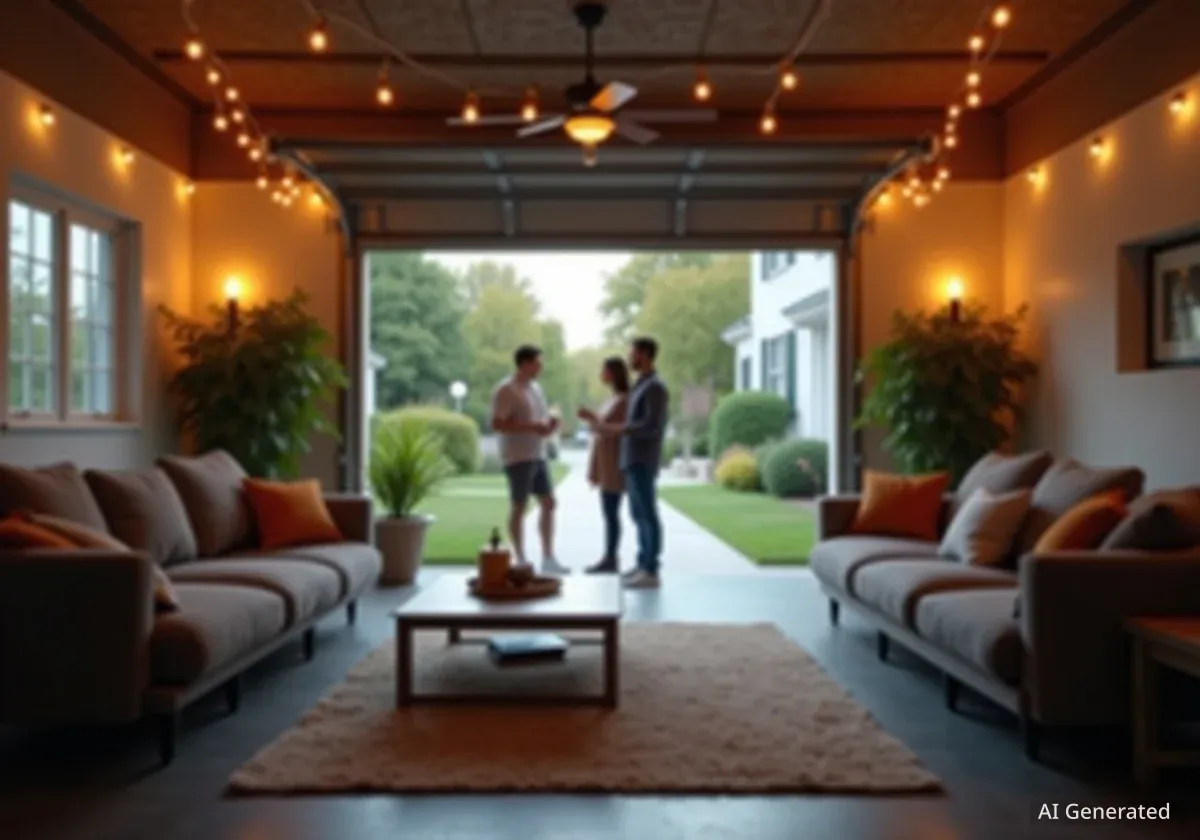
The traditional American garage, for decades a private and functional area, is undergoing a significant transformation. Instead of housing cars, lawnmowers, and forgotten boxes, many are now furnished with comfortable chairs, tables, and even refrigerators. This shift turns the garage into an extension of the living room, but with a crucial difference: it faces the street and the community.
This change is more than just a renovation project; it represents a cultural shift. In many modern suburbs, architectural design has prioritized privacy, with homes built to direct life towards the backyard. This has often led to a decline in casual, everyday interactions between neighbors. People drive into their garages, close the door, and disappear into their private homes, a pattern that can contribute to a sense of disconnect.
By repurposing the garage, residents are actively pushing back against this isolation. An open garage door serves as an invitation for conversation, a place where passersby can stop to chat without the formality of knocking on the front door. It creates a low-pressure environment for building relationships with those who live nearby.
The Search for a Third Space
Sociologists use the term “third space” to describe places outside of the home (the first space) and work (the second space) where people can relax, interact, and build a sense of community. Coffee shops, parks, and public libraries are classic examples. The garage is now emerging as an informal, residential version of this concept.
What Is a Third Space?
The concept of the “third space” was popularized by sociologist Ray Oldenburg in his 1989 book The Great Good Place. He argued that these informal public gathering spots are essential for a healthy civil society, democracy, and community vitality. They provide a neutral ground where people can gather and interact with a sense of ease and belonging.
For many, the appeal of the garage-as-third-space lies in its convenience and accessibility. It doesn’t require planning a trip to a café or park. Instead, community can happen organically, right at the edge of one's property. This is especially valuable in suburban areas that may lack central, walkable gathering places.
“It’s become that third space you can go,” noted a report on the trend, highlighting how this simple change can fundamentally alter the social dynamics of a street.
This movement is particularly resonant in a post-pandemic world, where many people continue to work from home and crave more local, in-person connections. The garage offers a safe, open-air setting for socializing with neighbors while remaining close to the comforts of home.
A Return to Old Traditions
While the idea of using the garage as a social hub may seem new, it echoes older American traditions of community life. For much of the 20th century, the front porch was the primary stage for neighborhood social life. Families would sit on their porches in the evenings, greeting neighbors and sharing news. It was a space that was both private and public, fostering a sense of shared community.
The Decline of the Front Porch
Architectural trends in the mid-to-late 20th century saw the decline of the front porch in favor of backyard patios and decks. This shift coincided with the rise of the automobile and the prominent two-car garage, which moved the focus of the home's facade from social interaction to vehicle access.
The repurposed garage can be seen as a modern revival of this tradition. Like the front porch, it provides a vantage point to observe the daily rhythms of the neighborhood and engage with people passing by. Some homeowners have even installed screen panels with doors to create a comfortable, bug-free “garage porch” experience.
This trend is not entirely new in all parts of the country. In many Midwestern and Northeastern communities, using the garage as a hangout spot has been a common practice for decades, particularly during the warmer months. However, its adoption in newer suburban developments across the country marks a broader recognition of the need for more connected neighborhoods.
Challenges and Criticisms
Despite its growing popularity, the garage-as-social-hub movement is not without its obstacles. One of the biggest hurdles for many residents is the rules enforced by Homeowners' Associations (HOAs). Many HOAs have strict regulations that dictate how a garage can be used.
Common HOA rules include:
- Requiring garage doors to remain closed except when entering or exiting.
- Prohibiting the parking of cars in the driveway or on the street.
- Restricting alterations to the garage's appearance.
These rules are often intended to maintain a uniform and tidy aesthetic throughout a neighborhood, but they can stifle the kind of organic community-building that the open-garage trend aims to foster. Some residents find themselves at odds with regulations that prioritize pristine appearances over lived-in, active communities.
Furthermore, not everyone is enthusiastic about the idea. Some homeowners prefer the privacy of their backyards and have no desire to socialize in front of their homes. Critics point out that a true “third space” is supposed to be separate from the home, and question whether a garage truly fits the definition. For those with beautifully cultivated back gardens, the idea of sitting in a garage facing a street holds little appeal.
Nonetheless, for a growing number of Americans, the benefits of community connection outweigh these concerns. By rolling up the garage door, they are not just making space for furniture; they are making space for their neighbors, one conversation at a time.