
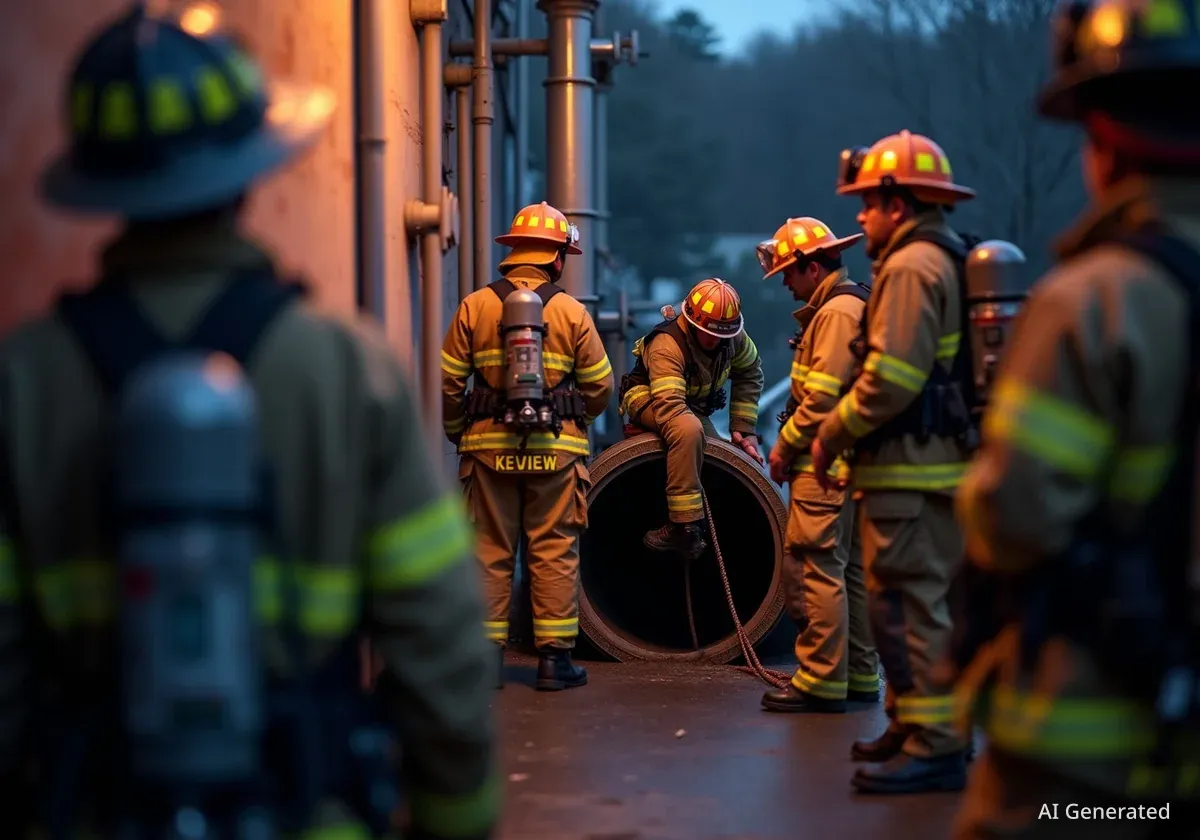



The Cinnaminson Fire Department recently conducted its annual confined space rescue training, a critical exercise designed to prepare firefighters for high-risk emergency situations. Members of the department’s A Platoon utilized the Riverton sewer plant as a realistic training ground to sharpen their skills in safely extracting individuals from hazardous, enclosed environments.
This yearly training is essential for ensuring that first responders are equipped to handle emergencies in locations such as sewers, tanks, and industrial vessels, where the risk of injury or fatality is significantly high without specialized knowledge and equipment.
Key Takeaways
- Cinnaminson Fire Department's A Platoon completed its annual confined space rescue training.
- The drills took place at the Riverton sewer plant to provide a realistic environment.
- Training focuses on preparing for rescues in hazardous, enclosed areas where standard procedures are insufficient.
- Such exercises are vital for mitigating the severe risks associated with confined spaces, including atmospheric hazards and engulfment.
Understanding the Dangers of Confined Spaces
A confined space is defined as an area large enough for an employee to enter and perform work but has limited or restricted means for entry or exit and is not designed for continuous occupancy. These spaces present unique and often invisible dangers that can incapacitate a person in minutes.
The primary threats in these environments are atmospheric. According to the Occupational Safety and Health Administration (OSHA), atmospheric hazards are the leading cause of fatalities in confined spaces. These include oxygen-deficient atmospheres, the presence of toxic gases like hydrogen sulfide or carbon monoxide, and flammable vapors.
Hazards in Confined Spaces
More than 60% of confined space fatalities are would-be rescuers who enter a space to help a colleague without proper training or equipment. This statistic highlights the critical need for specialized drills like the one conducted by the Cinnaminson Fire Department.
Types of Hazards Encountered
Firefighters training for these scenarios must prepare for a wide range of potential dangers beyond just air quality. These risks are broadly categorized to ensure comprehensive preparation.
- Atmospheric Hazards: Lack of oxygen (asphyxiation), poisonous gases, and combustible dust or vapors.
- Engulfment Hazards: The risk of being submerged in a liquid or a fine, flowable solid material like grain or sand.
- Mechanical Hazards: Unexpected activation of machinery, such as mixers or agitators, within the space.
- Physical Hazards: Extreme temperatures, poor visibility, falling objects, and slip-and-fall risks on wet or sloped surfaces.
The complexity of these combined threats is why generic rescue techniques are inadequate. Each confined space entry requires a specific, carefully planned approach.
The Structure of Specialized Rescue Training
The training conducted by the Cinnaminson Fire Department’s A Platoon is not a simple drill. It is a highly structured exercise that simulates the entire lifecycle of a confined space rescue operation, from initial assessment to victim extraction and medical care.
The choice of the Riverton sewer plant as a training location is strategic. Real-world industrial sites provide invaluable experience that cannot be replicated in a classroom or standard training facility. Firefighters face the actual physical constraints, potential contaminants, and complex layouts they would encounter during a real emergency call.
What is a Fire Department Platoon?
Fire departments typically operate on a platoon or shift system to provide 24/7 coverage. For example, a department might have three platoons (A, B, and C) that work rotating 24-hour shifts. The training of A Platoon ensures that one entire shift of firefighters maintains proficiency in this specialized skill.
Key Components of the Training Drill
During the exercise, firefighters practice a sequence of critical tasks. These procedures are standardized to ensure safety and effectiveness under immense pressure.
- Scene Assessment: The first step involves identifying all potential hazards, determining the number of victims, and establishing a secure perimeter.
- Atmospheric Monitoring: Rescuers use specialized multi-gas meters to test the air inside the space before entry. They check for oxygen levels, flammable gases, and common toxic substances.
- Ventilation: If the atmosphere is hazardous, teams must ventilate the space using powerful blowers to force fresh air in and push contaminated air out.
- Rescue Systems Setup: This involves assembling equipment like tripods, harnesses, and mechanical winches. These systems allow rescuers to be lowered into a space and for both the rescuer and victim to be safely hoisted out without causing further injury.
- Entry and Extraction: A rescuer, connected to a lifeline and often supplied with their own breathing air, enters the space to assess, package, and remove the victim.
This hands-on practice builds muscle memory and reinforces the systematic safety checks that prevent rescuers from becoming victims themselves.
The Importance of Proactive and Continuous Training
Confined space rescue is a low-frequency, high-risk event. While these calls may not happen often, the consequences of being unprepared can be catastrophic. Annual training is the minimum standard for many departments to maintain the skills needed to perform these complex operations safely.
Regular drills ensure that firefighters remain familiar with their specialized equipment. Technology in this field is constantly evolving, with improvements in air monitors, communication systems, and retrieval hardware. Continuous training allows departments to integrate new tools and techniques into their operational plans.
"Training in realistic environments like the Riverton sewer plant is crucial. It allows our members to apply their skills under conditions that closely mimic a real emergency, ensuring they are prepared for the physical and mental challenges of a confined space rescue." - Cinnaminson Fire Department Statement
By conducting these exercises proactively, the Cinnaminson Fire Department reinforces its commitment to public safety. This preparation ensures that if a worker in a local industry or a resident finds themselves in a perilous situation, the fire department has the capability to respond effectively and safely.
Ultimately, this type of specialized training is a cornerstone of a modern, professional fire service. It demonstrates an understanding that firefighting is about more than just fires; it is an all-hazards response that demands a broad and deep skill set to protect the community.