
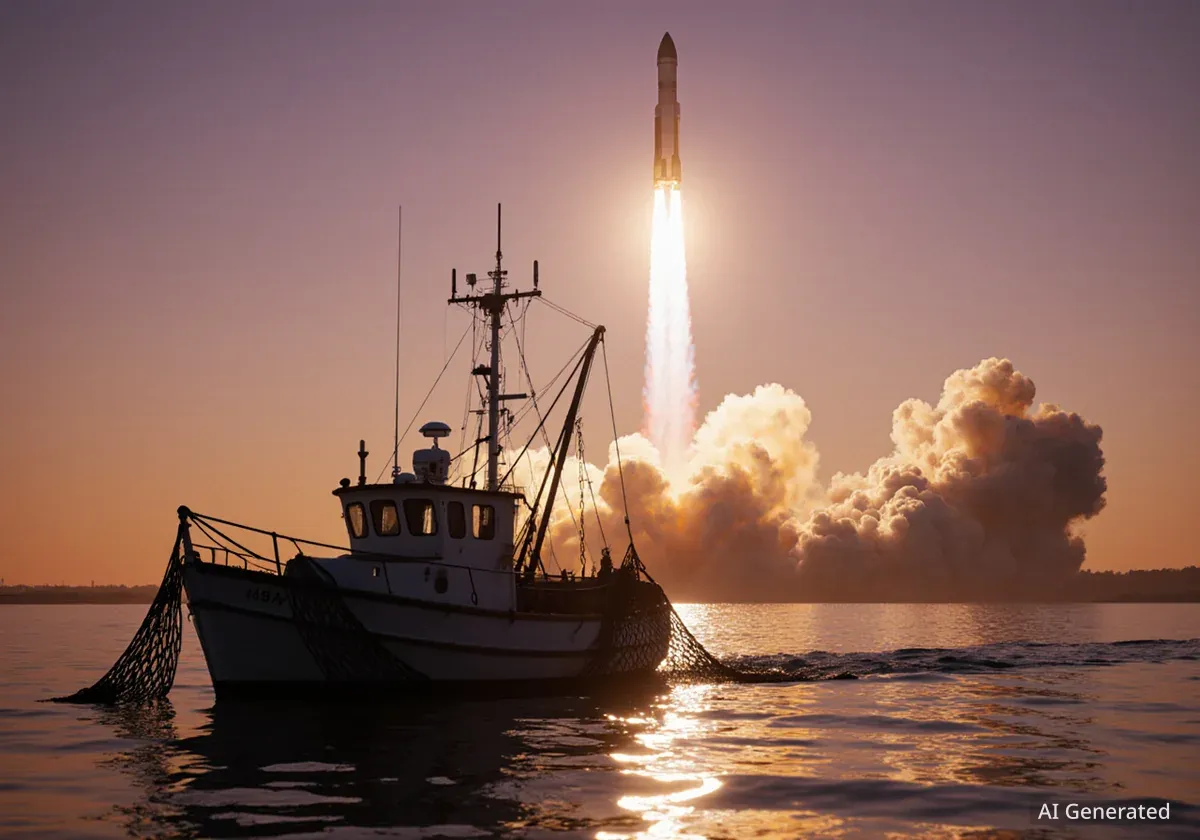
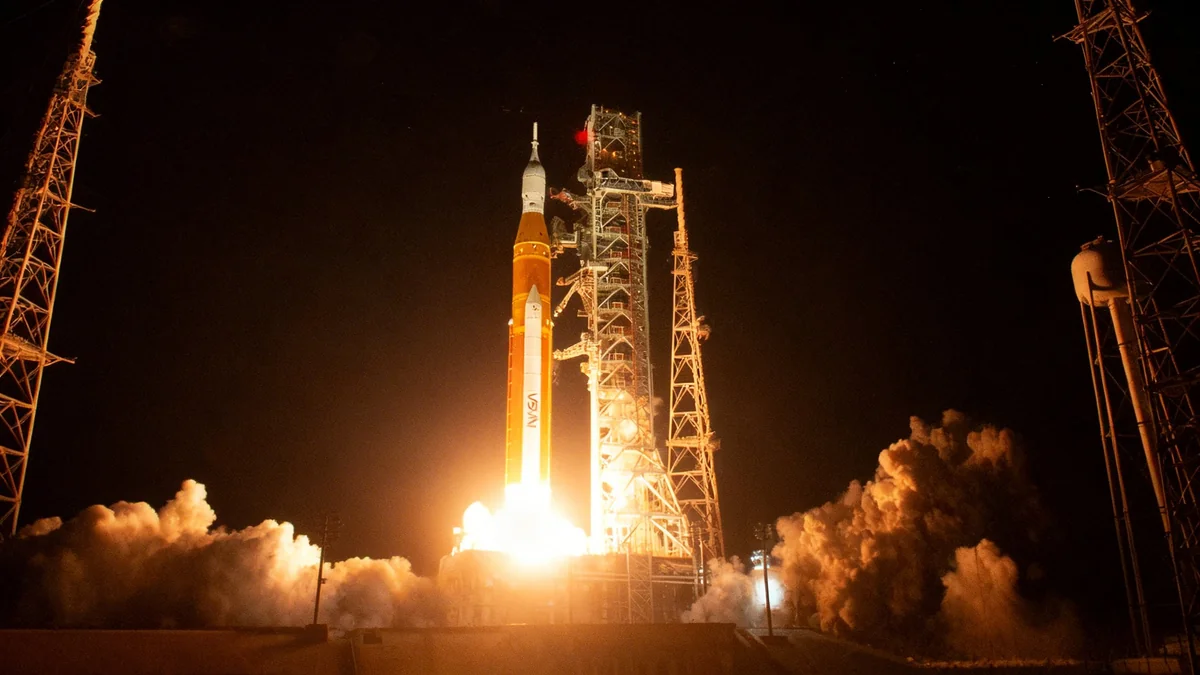
Florida's Space Coast is experiencing an unprecedented surge in rocket launches, transforming the region into a global hub for space exploration. However, this rapid expansion is creating a growing conflict on the ground, pitting the ambitions of the multi-billion dollar space industry against the delicate local ecosystem and the livelihoods of a centuries-old fishing community.
With the number of annual launches more than tripling in just five years, residents, scientists, and business owners are raising alarms about the long-term consequences of this aerospace boom on the state's treasured natural resources and local economy.
Key Takeaways
- The frequency of rocket launches from Florida has surged, with over 100 taking place in a recent year, primarily from SpaceX.
- Environmental groups are concerned about water and air pollution, as well as noise from sonic booms impacting wildlife in the Merritt Island National Wildlife Refuge.
- Commercial fishers report significant income loss due to frequent and prolonged port closures required for launch safety.
- A debate is unfolding between industry growth, environmental protection, and compensating local industries affected by the expansion.
A Region at a Crossroads
The heart of America's space industry, Florida's Space Coast, is booming. Companies like SpaceX and Blue Origin are not just launching rockets; they are expanding facilities and increasing their operational tempo. This growth brings jobs and technological prestige, but it also places immense pressure on the surrounding environment.
The Kennedy Space Center is uniquely situated within the Merritt Island National Wildlife Refuge, a critical sanctuary for manatees, sea turtles, dolphins, and numerous shorebirds. This proximity means that every launch has a direct impact on one of Florida's most sensitive ecological areas.
"Everybody thinks, ‘OK, we’re going to Mars, we’re going to the moon,’” said Bob Zales, executive director of the Southeastern Fisheries Association. “They don’t really think about the the impact to the environment and to the people that live and work over there.”
The Environmental Toll of Ambition
Scientists and environmental advocates point to a range of issues stemming from the increased launch cadence. The concerns are not just theoretical; they are visible in the waters of the Indian River Lagoon, an estuary already struggling with pollution from other sources.
Water and Air Quality Concerns
Rocket exhaust releases a mixture of gases, including carbon dioxide and nitrous oxide, which can contribute to acid rain. Furthermore, heavy metals used in space technology, such as lithium and arsenic, have been found in elevated levels on Merritt Island, potentially accumulating in the local wildlife.
Wastewater discharge is another major point of contention. Blue Origin is seeking to renew a permit to discharge up to 490,000 gallons of water per day into a local stormwater pond that may flow into the lagoon. According to Environmental Protection Agency records, the company has previously been cited for discharging highly acidic water.
Acidic Discharge
Water samples from a Blue Origin facility showed acidity levels as low as 3.8 on the pH scale. The EPA's acceptable range is between 6 and 9. Such low pH levels can be devastating to marine life.
"That’s pretty much going to nuke the shells of your clams and oysters,” explained Laura Wilson, executive director of the Marine Resources Council, highlighting the fragility of the lagoon's ecosystem.
The Sound and the Fury
Beyond chemical pollution, the physical disruption from launches is a growing worry. The next generation of rockets, like SpaceX's Starship-Super Heavy, is expected to be significantly louder. Federal estimates predict its sonic boom could reach 110 decibels over Merritt Island—equivalent to a live rock concert.
"I do know that sea turtles don’t enjoy being rumbled with rockets."
Environmentalists fear these deafening and frequent booms could severely disrupt the behavior of nesting birds, sea turtles, and marine mammals that rely on the refuge for their survival.
An Industry Sidelined
For generations, commercial fishing has been a cornerstone of the Space Coast's economy. Now, that industry is facing what some call an existential threat. For every launch, the U.S. Coast Guard establishes a large safety zone, closing a significant portion of the Atlantic Ocean and often shutting down access to and from Port Canaveral.
What used to be an occasional inconvenience has become a weekly disruption. John DeVane, a local mackerel fisherman, stated the closures now impact about half of his available fishing days, leading to a substantial loss of income.
"I’m not trying to say anything bad about the rocket industry, because I know it’s a part of technology," DeVane said. "But in a way, it’s like, wow. We’re like the little man, and we’re just getting totally pushed out by these multibillion-dollar industries."
A Call for Compensation
Fishing groups are not asking to stop the launches. Instead, they are advocating for the creation of a relief fund, financed by the commercial space companies, to compensate them for the income lost during mandatory port closures. They argue that if their business operations are being curtailed for the benefit of another industry, they should be made whole.
Alexis Meschelle, executive director of Organized Fishermen of Florida, warns of a domino effect. "It’s literally this huge ripple effect that really no one’s taking into consideration," she said. "The future of commercial fishing on the East Coast is going to become nonexistent if we can’t figure this out.”
The Search for a Balance
State lawmakers are navigating a difficult path, trying to support a marquee industry while addressing the concerns of their constituents. State Sen. Debbie Mayfield acknowledged the environmental risks but expressed confidence that space companies are committed to protection. "We have to live together," she commented.
One proposed solution for the fishing industry has drawn a mixed response. State Rep. Tyler Sirois suggested allowing fishermen to operate inside restricted zones if they are willing to assume the risk of falling debris. While some fishermen are desperate enough to consider it, others find the choice unacceptable.
Meschelle called the idea of choosing between safety and solvency "nefarious."
Meanwhile, environmental groups are pushing for tangible solutions, such as requiring space companies to invest in closed-loop water recycling systems to eliminate polluted discharge. Charles Venuto, president of the Merritt Island Wildlife Association and a former environmental scientist at Kennedy Space Center, believes the technology is attainable.
As founders like Elon Musk and Jeff Bezos push humanity's boundaries, Venuto said their companies are at an "important juncture." He hopes they choose a path of environmental stewardship. "I don’t want this to be a playground for billionaires to launch rockets," he concluded.