

Developers have presented an updated plan for the long-proposed Riverside MBTA Complex in Newton, introducing changes that increase the number of housing units, expand retail space, and alter the building's layout. The revised proposal was detailed during a recent public hearing with the Newton Land Use Committee, marking the latest step for a project that has been in development for over two decades.
Key Takeaways
- The updated Riverside MBTA project now proposes 757 housing units, an increase of seven units.
- Total project size has grown to 897,900 square feet, with an additional 1,800 square feet of retail space.
- Architectural changes include reorienting a building to improve courtyard access and adding a seventh story to another structure.
- The plan includes a multi-level parking strategy with a 980-space shared-use garage and specific commitments for MBTA parking.
- Local residents have raised concerns about potential traffic increases on Grove Street.
Revised Project Details Unveiled
The latest iteration of the Riverside Project, a mixed-use development planned for the Riverside MBTA station site, was presented to the Newton Land Use Committee on Tuesday. This was the second public hearing on the project since it resumed progress following a pause in 2022.
Steven Buchbinder, an attorney representing the developer, outlined the adjustments made since the previous committee meeting on September 16. "Since that time, we have submitted four separate peer review responses and have received follow-up memos from each peer reviewer," Buchbinder stated. He added that the team also addressed questions from committee members and other counselors.
The project, which originally began as an idea over 20 years ago, has evolved significantly. A key shift occurred after the pandemic when plans for extensive office space were traded in favor of more residential housing to meet current market demands.
A Long-Term Vision
The redevelopment of the Riverside MBTA station has been a long-standing goal for Newton. The project aims to transform a major transit hub into a vibrant community with housing, retail, and public spaces, a concept that has been refined multiple times over two decades to adapt to changing economic and social conditions.
Architectural and Capacity Adjustments
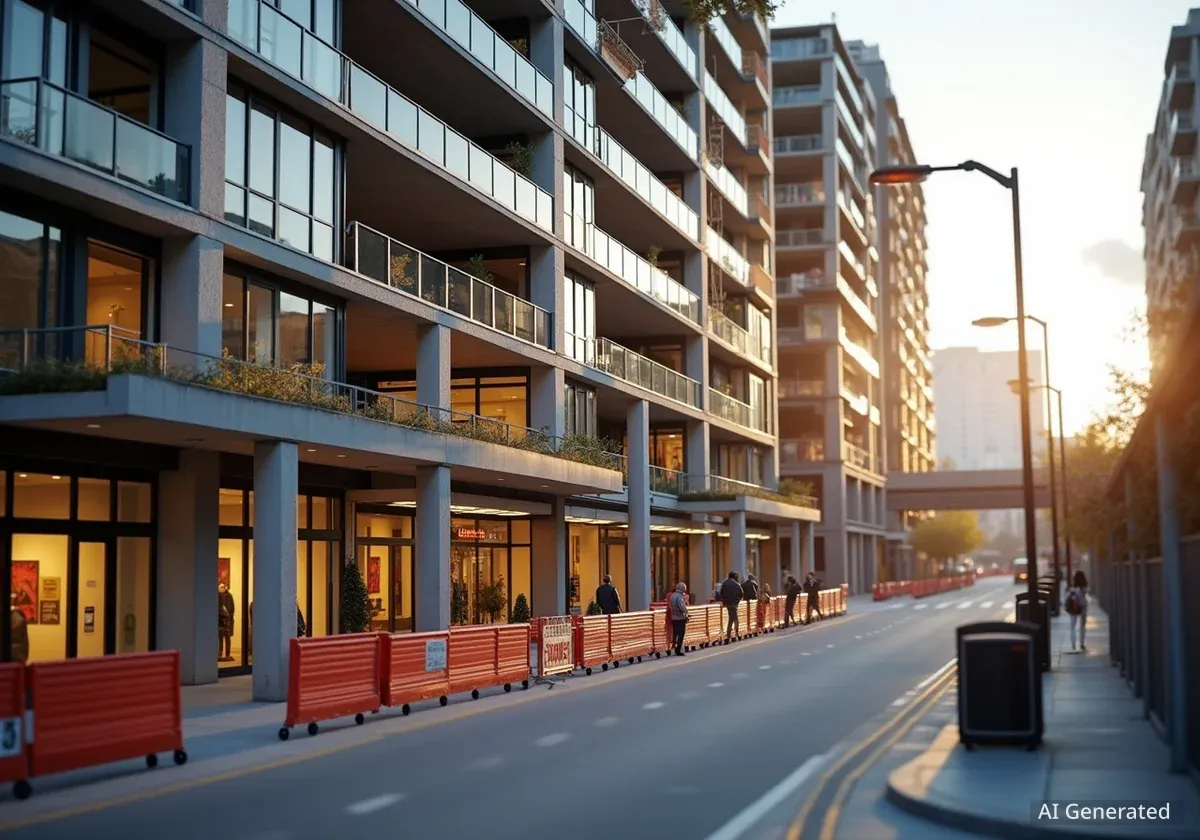
A central feature of the new plan involves a significant architectural change to the building layout. A portion of a building previously facing Grove Street has been removed to create a more open and accessible entry into a central courtyard.
"Another thing that does is add light and air into that courtyard that’s located in the middle of buildings two and three, and we think that’s a benefit for the residents as well as for the massing of the architecture in this location," Buchbinder explained during the presentation.
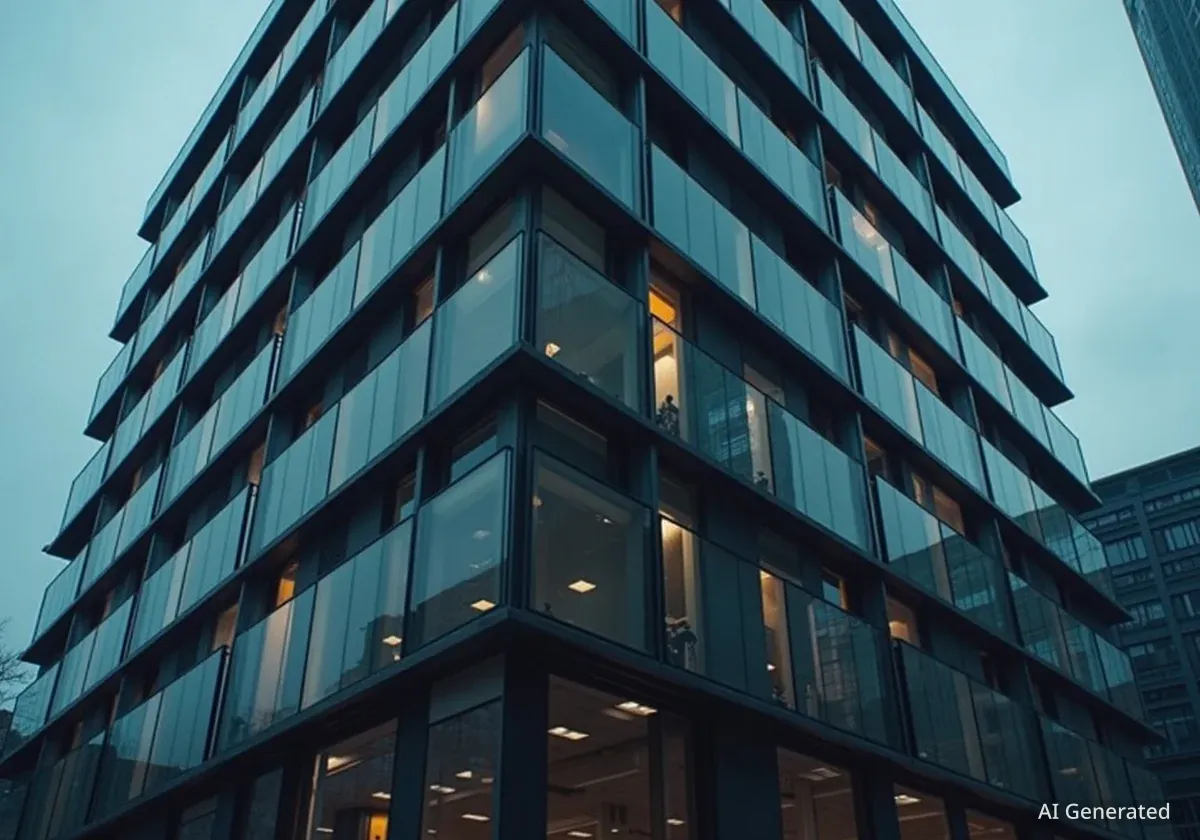
To compensate for the space lost in this redesign, the displaced housing units were added to another structure, Building 1, by constructing a seventh story. Buchbinder assured the committee that careful design considerations were made to integrate the new floor seamlessly. He mentioned the use of box-bay windows, detailed brickwork, and strategic setbacks to ensure the addition appears natural.
"The type of architecture, the style, all the different ideas that we were contemplating are intact with the new, proposed, additional story," he said.
Updated Project Figures
The recent modifications result in a net increase in both residential units and commercial space. The project's total figures have been adjusted as follows:
- Housing Units: Increased by 7, for a new total of 757 units.
- Total Area: Increased by 10,000 square feet, reaching 897,900 square feet.
- Retail Space: Expanded by 1,800 square feet.
Buchbinder noted that the expansion of retail space was a direct response to feedback from professional reviewers. "We think it’s an enhancement and something that was requested by the professionals in response memos," he said.
Project Growth by the Numbers
The latest updates bring the total housing unit count to 757 and the overall project size to nearly 900,000 square feet. This reflects the developer's strategy to maximize residential density at the transit-oriented site.
Parking and Traffic Management Strategy
A comprehensive parking plan is a critical component of the development. The proposal outlines several dedicated parking areas to serve residents, commuters, and retail visitors. The centerpiece of this strategy is a large shared-use garage.
Lispeth Tibbits-Nutt, the director of development for the 128 Business Council, provided an analysis of the parking infrastructure. "That shared-use garage is really the focus of our analysis because we want to make sure that we right-size it," Tibbits-Nutt said. "It’s not too big, it’s not too small, and it can accommodate all those different shared usages."
The total parking allocation includes:
- A 980-space shared-use garage.
- A 286-space lot exclusively for MBTA use.
- An 88-space garage for residents only.
- An additional 43 on-street parking spaces.
A key negotiation with the MBTA involves guaranteeing a certain number of spaces for its employees. Tibbits-Nutt confirmed the plan meets this requirement. "At this point, where we’re at, is that we have promised [MBTA] 650 spaces at peak periods," she said. However, she also noted that real-world usage is often much lower, with the average peak need being closer to 350 spaces.
Community Feedback and Future Flexibility
During the public hearing, local residents voiced their concerns, primarily focused on the potential impact on traffic. Ewan Cameron, a Newton resident living near the proposed site, questioned the effects of new traffic patterns.
"I think I heard in one of the last meetings you were going to stop left turns coming off Grove Street into the MBTA lot," Cameron said. "This is going to add a ton of traffic along Grove Street, and I think it’s unreasonable."
In response to broader concerns about the long-term viability and adaptability of the project, the development team emphasized their commitment to flexible design. Jesse Baerkahn, a developer on the project, addressed this directly.
"I think it is then on us, over the years ahead, to design and engineer spaces and prepare spaces that are suitable for a range of different operators, regardless of where the market goes," Baerkahn stated. This approach aims to future-proof the development against shifting market trends.
The Newton Land Use Committee has decided to hold the item for further consideration. The project will be reviewed again at a meeting scheduled for October 21.