



As cooler temperatures approach, many households look for efficient ways to maintain comfort without increasing central heating costs. Space heaters provide a targeted heating solution for individual rooms, home offices, or drafty areas, offering both convenience and potential energy savings.
These portable appliances come in various types, each with distinct features, safety mechanisms, and heating capabilities. Understanding the differences between ceramic, panel, and baseboard heaters, as well as key functions like adjustable thermostats and automatic shut-off, is crucial for making an informed decision that suits your specific needs.
Key Takeaways
- Space heaters offer an energy-efficient way to heat specific rooms or small areas without using a central heating system.
- Key safety features to look for include automatic tip-over shut-off and overheat protection to prevent accidents.
- Different types of heaters, such as ceramic tower, wall-mounted panel, and baseboard models, are designed for different room sizes and uses.
- Modern space heaters often include features like digital thermostats, multiple heat settings, and smart home integration for enhanced control and efficiency.
Understanding Different Types of Space Heaters
The market offers a wide array of space heaters, each employing different technology to generate warmth. The most common types are designed to meet specific heating requirements, from quickly warming a small office to maintaining a consistent temperature in a larger living area.
Ceramic Heaters for Quick Warmth
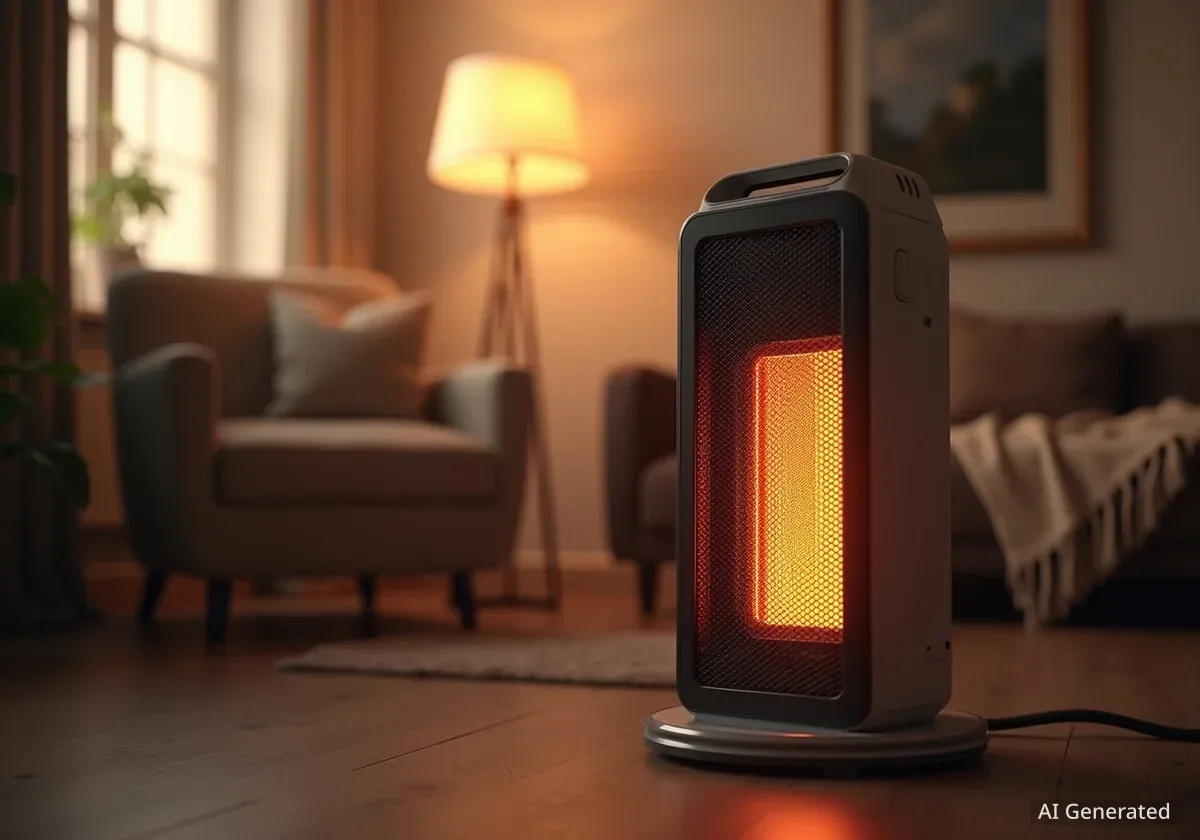
Ceramic heaters are among the most popular choices for personal and small-room heating. They use a ceramic heating element that warms up quickly and a fan to distribute the hot air throughout the space. This method provides rapid, even heating.
Models like the Lasko Ellipse Ceramic Tabletop Heater are valued for their compact design and quiet operation, making them suitable for desks or small bedrooms. Similarly, the Pelonis Ceramic Tower Indoor Space Heater demonstrates the ability of these units to heat a room to a specific temperature, such as 70 degrees Fahrenheit, and maintain it. Many tower models, like the Wind Talk Space Heater, also include an oscillation feature to circulate heat more widely.
Did You Know?
Ceramic heaters are known for their self-regulating properties. As the ceramic element gets hotter, its electrical resistance increases, causing it to conduct less electricity and preventing it from overheating. This is an inherent safety feature of the technology.
Wall-Mounted and Panel Heaters for Space Saving
For those with limited floor space, wall-mounted heaters offer a permanent and unobtrusive solution. These units are often slim and designed to blend in with home decor. They provide consistent radiant or convection heat without occupying valuable room.
The Dreo Smart Wall Heater is an example of a modern wall-mounted unit, often featuring smart controls that allow for remote operation via a smartphone app. Another option is the Envi Plug-In Electric Panel Wall Heater, which operates at a low wattage for energy efficiency and is designed to be quiet, making it ideal for bedrooms or offices where noise is a concern.
Baseboard Heaters for Medium-Sized Rooms
Electric baseboard heaters are designed to heat larger spaces by warming the cool air near the floor, which then rises and circulates naturally through convection. These units are longer and lower to the ground than tower heaters.
The Comfort Zone Electric Baseboard Space Heater is a typical model in this category, offering adjustable thermostat settings to maintain a stable room temperature. Its durable construction and safety features make it a reliable choice for consistent heating in medium-sized rooms.
Essential Safety Features to Consider
Safety is a primary concern when using any space heater. Modern devices are equipped with multiple safety mechanisms to minimize risks. When selecting a heater, it is essential to look for models that have been tested and certified by a recognized safety organization like UL (Underwriters Laboratories).
Understanding Safety Certifications
A UL, ETL, or CSA mark on a space heater indicates that it has been independently tested and meets stringent North American safety standards. These certifications verify that the product's construction, performance, and electrical components are safe for household use when operated according to the manufacturer's instructions.
Key Protective Functions
Two of the most critical safety features are tip-over protection and overheat protection.
- Tip-over Shut-off: This feature uses a sensor to automatically turn the heater off if it is knocked over. This prevents the hot heating element from coming into contact with flammable surfaces like carpets or curtains.
- Overheat Protection: An internal sensor monitors the temperature of the device. If it exceeds a safe level, the heater will automatically shut down to prevent damage or a potential fire.
Nearly all reputable modern heaters, from the small Lerat Electric Space Heater to larger tower models, incorporate these essential protections.
Choosing the Right Heater for Your Needs
Selecting the best space heater involves more than just picking a design. It requires assessing your room size, heating goals, and desired features for convenience and efficiency.
Portability and Size
For personal heating, such as under a desk or in a small cubicle, a compact and portable unit is ideal. The Lerat Electric Space Heater and the Aikoper Space Heater are examples of small, powerful devices designed for this purpose. Their portability allows them to be moved easily wherever extra warmth is needed.
The GiveBest Space Heater is another compact option that often includes a digital display for precise temperature control, combining portability with modern features.
Advanced and Smart Features
For those seeking greater control and integration, some space heaters offer advanced functionalities. The Dyson Hot+Cool AM09 is a premium appliance that functions as both a heater and a cooling fan. Its unique design and powerful air projection capabilities allow it to heat a room quickly and evenly. Such multi-function devices often come at a higher price point but provide year-round utility.
Smart heaters, like the Dreo model, can be controlled remotely, allowing you to pre-heat a room before you enter or adjust settings without getting up. These features contribute to both comfort and energy management.
"An efficient space heater allows you to implement zone heating, warming only the room you're in instead of the entire house. This targeted approach can lead to significant reductions in overall energy consumption during colder months."
Ultimately, the right space heater is one that balances heating performance, safety, and energy efficiency for your specific environment. By evaluating the different types and features available, consumers can find a reliable appliance to stay warm and comfortable throughout the winter.