
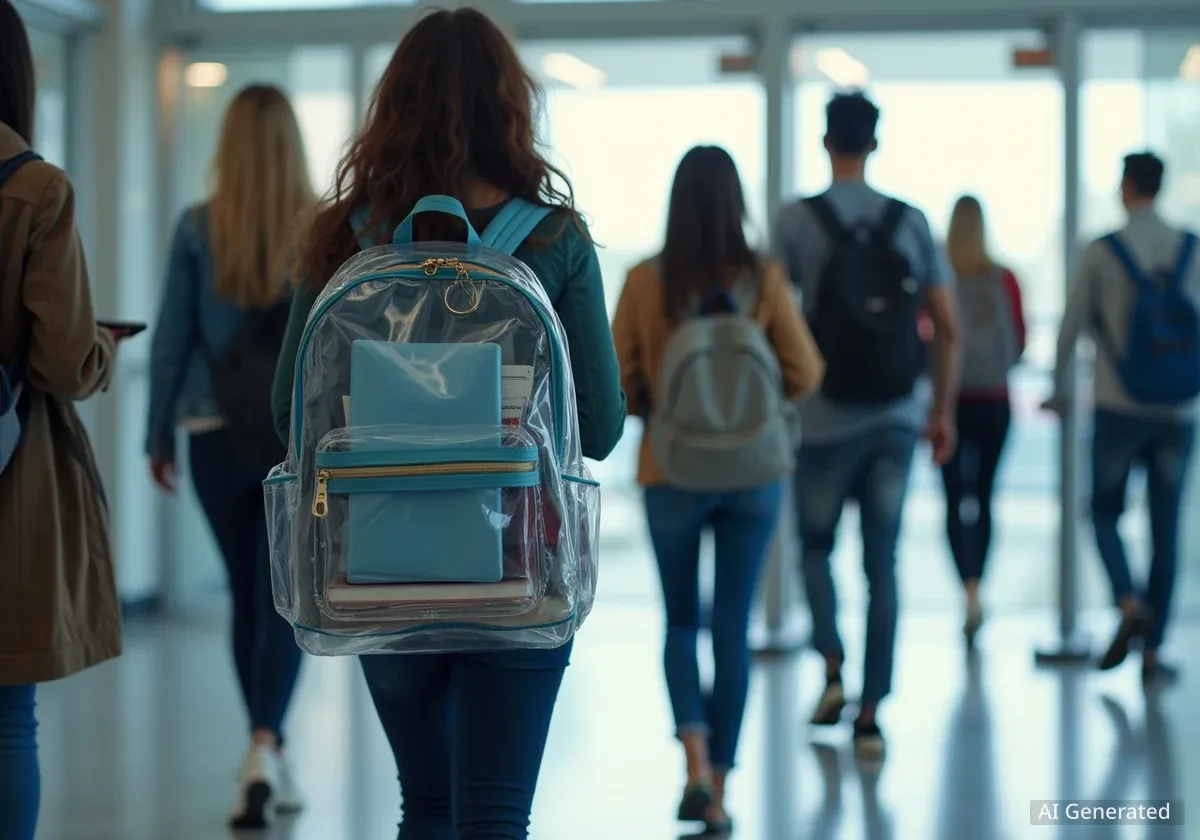

The demand for transparent backpacks is increasing as more schools, event venues, and workplaces implement clear bag policies to enhance security. These see-through bags, once a niche item, are now a common sight, designed to offer a quick and efficient way for security personnel to inspect contents without physical contact.
A notable example in this growing market is the "Retro Vintage Rockets Space Kid Clear Backpack," a product that combines the functional requirements of transparency with design elements aimed at a younger audience. This trend highlights a broader shift in how personal accessories are adapting to modern security needs, balancing practicality with personal expression.
Key Takeaways
- Clear backpacks are becoming more prevalent due to widespread adoption of clear bag policies in schools and public venues.
- These bags are typically made from materials like transparent PVC and polyester, chosen for durability and visibility.
- Design features often include multiple compartments to maintain organization, addressing a key user concern with transparent bags.
- The market is diversifying, with products now offering aesthetic elements like themed prints to appeal to a wider range of consumers.
The Driving Force Behind Transparent Bags
The rise of the clear backpack is directly linked to the implementation of security measures across various institutions. Following incidents that have raised public safety concerns, many organizations have adopted policies requiring transparent bags to streamline entry processes and improve threat detection.
Schools have been a primary driver of this trend. Districts in numerous states have mandated clear or mesh backpacks to prevent weapons or other prohibited items from being brought onto campus. This policy allows administrators and security staff to quickly scan a bag's contents, reducing the need for time-consuming individual searches.
A Brief History of Clear Bag Policies
While school mandates have recently brought clear bags into the spotlight, the policy originated in professional sports. The NFL introduced a league-wide clear bag policy in 2013 to enhance public safety at stadiums. The policy's success in speeding up entry and improving security led other organizations, including concert venues, festivals, and even some workplaces, to adopt similar rules.
Beyond educational settings, major entertainment and sporting venues have almost universally adopted these rules. For concert-goers and sports fans, a clear bag is often the only type of personal carry-on permitted, making these backpacks an essential item for attending public events.
Anatomy of a Modern Clear Backpack
Manufacturers are responding to this demand with products that focus on durability, functionality, and even style. The materials and construction are critical to a bag's performance and longevity.
Material Composition and Durability
Most clear backpacks are constructed from a combination of materials. The primary transparent component is typically Polyvinyl Chloride (PVC), a durable and flexible plastic that provides the required see-through quality. To support the structure and add resilience, manufacturers often use polyester for the straps, seams, and trim.
Reinforced stitching is another key feature, particularly around the straps and zippers where stress is highest. According to product specifications for items like the Retro Vintage Rockets backpack, this reinforcement is intended to ensure the bag can withstand the rigors of daily use, from carrying heavy textbooks to being transported to various events.
Product Specifications at a Glance
- Primary Materials: Transparent PVC and Polyester
- Common Dimensions: Approximately 10.6 x 7 x 15.7 inches (27 x 18 x 40 cm)
- Standard Compartments: A large main section, a smaller front pocket, and two side mesh pockets.
- Additional Features: Internal organizers, such as mesh slots and key clips, are often included in the front compartment.
Functional Design for Daily Use
While transparency is the main requirement, usability remains a top priority. A well-designed clear backpack addresses the organizational challenges that a single-compartment bag might present. The standard layout includes a spacious main compartment suitable for books, laptops, or clothing.
A secondary front compartment is common, often equipped with smaller mesh slots to hold items like pens, calculators, and keys. This helps keep smaller objects from getting lost in the main section. Additionally, dual side mesh pockets are a frequent feature, providing convenient storage for water bottles or umbrellas.
Personalization and Market Appeal
As clear backpacks become more of a requirement than a choice, consumers are seeking options that reflect their personal style. Initially, most designs were purely utilitarian, but the market is now seeing a rise in products that incorporate unique aesthetic elements.
Some companies offer backpacks with colored trim, while others, like the one featuring a "Retro Vintage Rockets" theme, use prints on the non-transparent parts of the bag. This allows users, particularly children and teenagers, to have a bag that meets security rules without sacrificing personal expression. The inclusion of initial designs or other personalized features further transforms a mandatory item into a meaningful accessory.
"The challenge is to create a product that is compliant with security policies but doesn't feel institutional. By adding design elements and personalization, we can give users a sense of ownership and style."
This approach helps normalize the use of clear bags, making them feel less like a security imposition and more like a standard school or event accessory. The market is expected to continue evolving, with more brands entering the space and offering a wider variety of designs, colors, and features.
Practical Considerations for Owners
Owning a clear backpack comes with a unique set of considerations, particularly regarding maintenance and privacy.
Care and Maintenance
Due to the nature of PVC, clear backpacks require specific care to maintain their appearance and structural integrity. Most manufacturers advise against machine washing, as it can damage the plastic and the stitching. Instead, spot cleaning with a damp cloth is the recommended method.
To preserve the shape and any printed designs, it is best to air-dry the backpack vertically. Bleaching, ironing, or wringing the material should be avoided, as these actions can cause the PVC to warp, crack, or become cloudy.
Navigating Privacy Concerns
The most obvious trade-off with a clear backpack is the lack of privacy. Every item inside is visible, which can be a concern for some users. To manage this, many people use smaller, opaque pouches or cases within their clear bags to hold personal items like wallets, keys, or hygiene products. This approach allows them to comply with the clear bag policy while maintaining a degree of personal privacy for sensitive belongings.
Ultimately, the clear backpack represents a functional adaptation to a world with heightened security awareness. As policies evolve, so too will the products designed to meet them, blending compliance, durability, and a touch of personal style.